
Updated 30 October 2026
As an Amazon Associate I earn from qualifying purchases.
When it comes to the best yarn for crochet baskets, not all yarns behave the same. I learned this quickly after making baskets that either collapsed like a pillow or turned into soft, floppy bowls.
A crochet basket is a simple project, but the yarn you choose completely changes the result.
The right yarn gives structure and strength, while the wrong one leaves you with something that can’t hold its shape.
So what makes a yarn “basket-worthy”?
Why does cotton hold better than t-shirt yarn, and why do chunky wool blends behave so differently?
After plenty of trial and error, here’s what I’ve learned about choosing the best yarn for strong and sturdy crochet baskets.

The right yarn choice won’t just change how your basket looks — it determines whether it stands tall or collapses the moment you let go.
What Makes a Good Basket Yarn?
When I crochet a basket, I always start by thinking about structure.
A basket isn’t just decoration — it has a job to do. It needs to stand upright, hold its contents, and feel solid in your hands. That’s why the yarn matters so much more than it does for a scarf or a blanket.
The very first thing I look for is sturdiness.
Fiber content is another big factor. Natural fibers, especially cotton, are firm and crisp. They lock stitches in place, keeping edges straight and sides upright. Acrylic yarn, on the other hand, might look colorful and inviting, but it stretches over time, and ends up sagging under its own weight. If you’re looking for yarn recommendations, I’ve shared my favourite eco friendly yarn options here
Weight and thickness. Thin yarn makes tiny stitches and flimsy walls, while chunky yarn builds structure fast and feels like a real basket.
Texture matters too. Smooth yarn shows clean stitches; fuzzy yarn hides them. I love seeing each loop snap into place — like a puzzle clicking together.
Put all these factors together, and you start to see why the best yarn for crochet baskets is sturdy, thick, and structured.
Top Yarn Types for Crochet Baskets
I’ve tried many yarns for baskets over the years. Here are the ones that consistently make the cut.
▶ Cotton Yarn
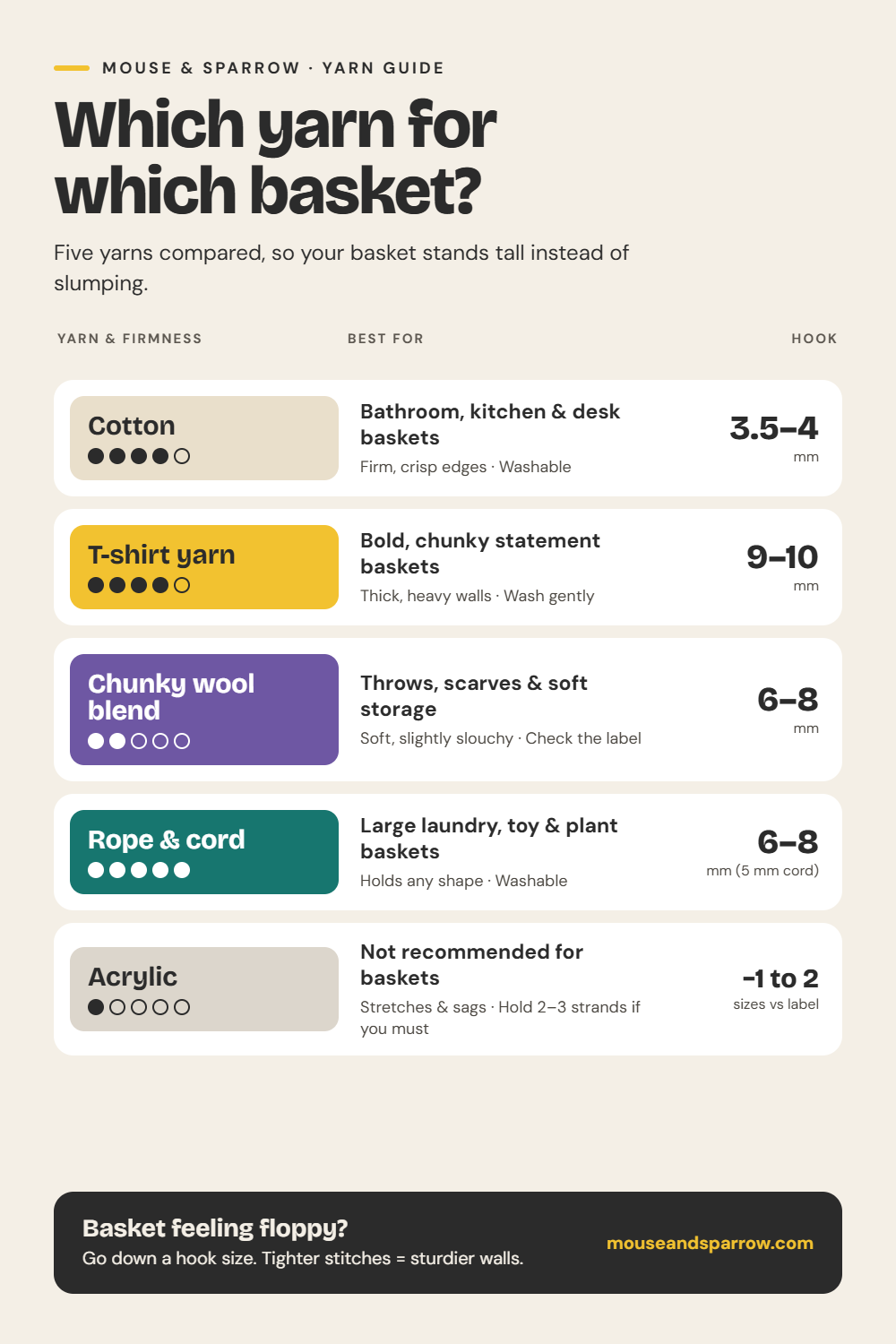
Cotton is my first choice for most baskets. Cotton holds its shape far better than acrylic which makes it perfect for baskets which get used everyday — think bathroom storage, kitchen utensils, or desk organizers.
Cotton can feel a little tough on the hands, especially if it’s mercerized or tightly spun, but that’s part of the appeal. The slight resistance is satisfying, like the yarn is cooperating with you rather than sliding away.
▶ T-Shirt Yarn
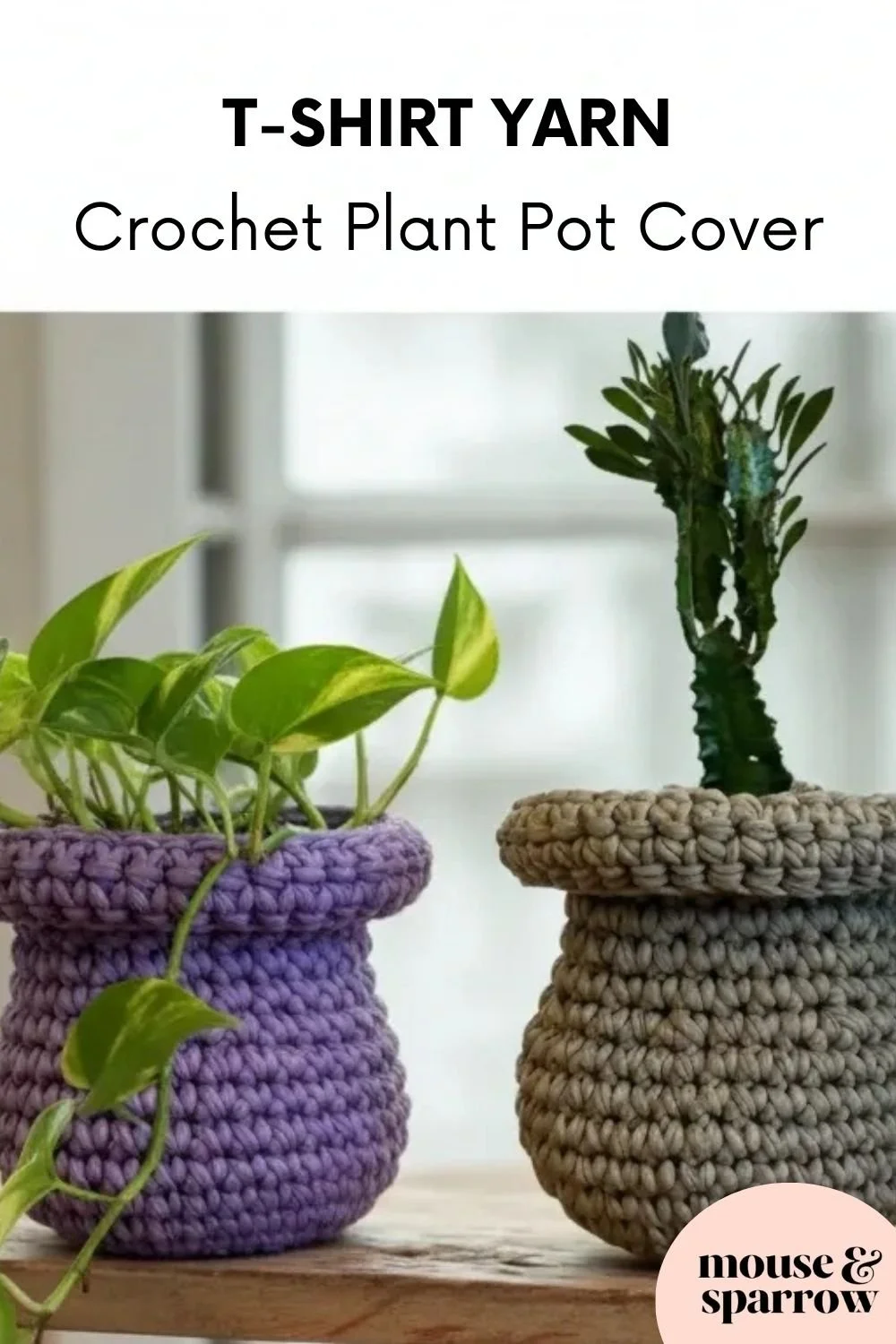
T-shirt yarn is bold and chunky, a completely different experience. I love t-shirt yarn because it’s thick, quick to work with, and eco-friendly. It’s usually made from recycled fabric, which gives it character and weight.
When I crochet a basket with t-shirt yarn, each stitch pops. The walls are thick, the edges firm, and the finished basket has a weight and presence that commands attention. I remember making a bright turquoise t-shirt yarn basket for my craft supplies — it practically demanded a spot on the desk because it looked so substantial and fun.
The tricky part with t-shirt yarn is consistency. Thickness can vary slightly between batches, so your stitches might not be perfectly uniform. But that irregularity adds charm, making the basket feel handmade in a way that’s impossible to achieve with perfectly smooth cotton. The Crochet Basket Studio is an easy way to get started.
▶ Chunky Wool Blends
Chunky wool blends give a softer, more tactile experience. The yarn feels almost cozy in your hands, and the finished baskets have a subtle warmth. Wool blends aren’t as stiff as cotton, so the edges may not be as sharp, but they’re perfect for decorative baskets.
I made a chunky wool blend basket to hold extra scarves in the living room. The marled tones created a rustic, handmade vibe, and the basket felt like a soft hug as I carried it to the couch. Over time, the wool slightly felted, making the fabric even stronger. The softness made it perfect for holding delicate items without scratching or snagging.
Wool blends can be a little pricier, but they strike a nice balance between softness, structure, and durability. Pure wool is beautiful but can shrink or felt unpredictably, so blends are usually safer.
▶ Rope or Cord Yarns
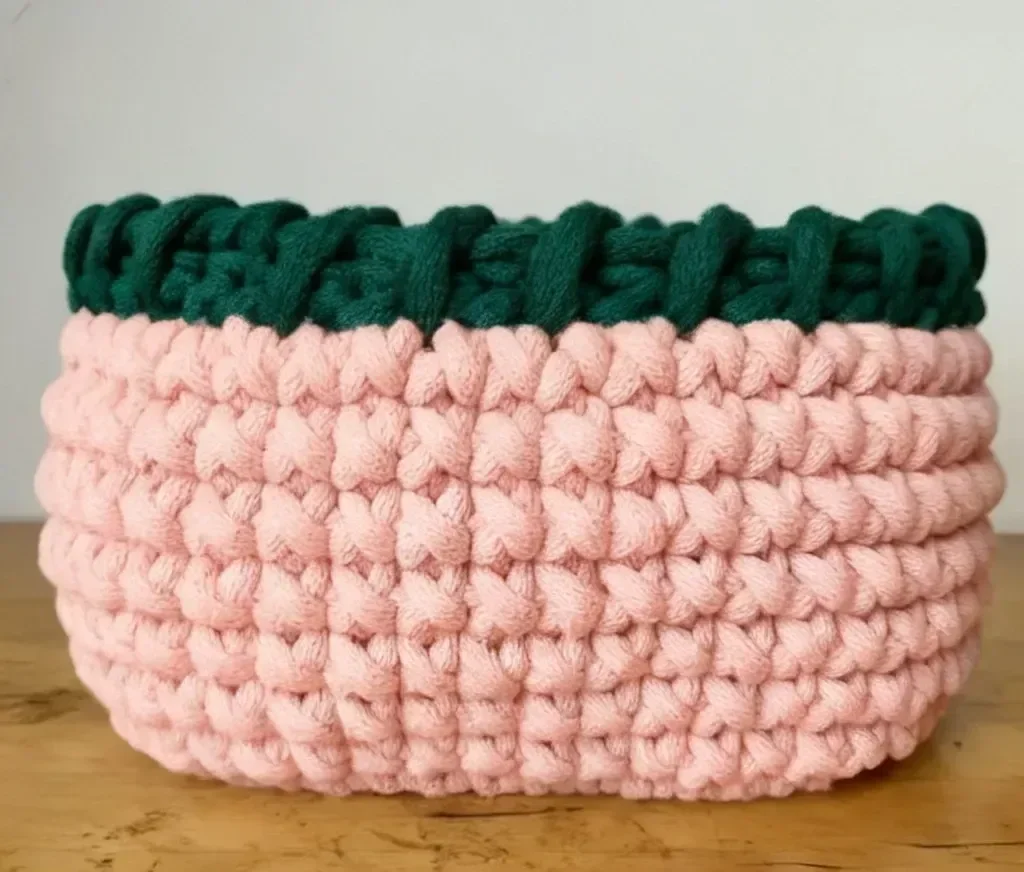
Rope-style yarns are the powerhouses of basket-making. Thick cotton cord, jute, or synthetic rope yarns create baskets that feel like furniture. When I crochet with rope, I can feel the firmness in my fingers and the way the fibers resist stretching. The basket starts to take shape almost instantly.
My go-to is braided cotton cord from Bobbiny. It’s smooth, even, and comes in colors that look right at home in a modern room, so your basket reads as a design piece rather than a craft project. Because it’s braided, it holds its shape without feeling stiff or scratchy, and the stitches stay crisp all the way up the walls.
These baskets are stunning. Large rope baskets hold laundry, plant pots, or even toys with ease. They have an industrial-chic look that’s both functional and decorative. They take a bit more effort to work with (my hands feel it after a while), but the end result is worth every tug and pull.
▶Can Eco-Friendly Yarns Work for Crochet Baskets?
The short answer: sometimes — with the right expectations.
Many eco-friendly yarns are softer or more flexible by nature, which can make them less suitable for baskets that need structure. However, thicker cotton cords, recycled t-shirt yarns, and dense natural fibres can work well when paired with the correct hook size and firm tension.
If sustainability matters to you, focus on:
Thickness over softness
Minimal stretch
Dense stitch patterns
I’ve put together a detailed guide to eco-friendly yarns I genuinely enjoy working with — including notes on which ones are better suited to structured projects like baskets. Find out more here: Beautiful, Eco-Friendly Yarns You’ll Love to Work With
▶How Yarn Choice Changes Your Basket
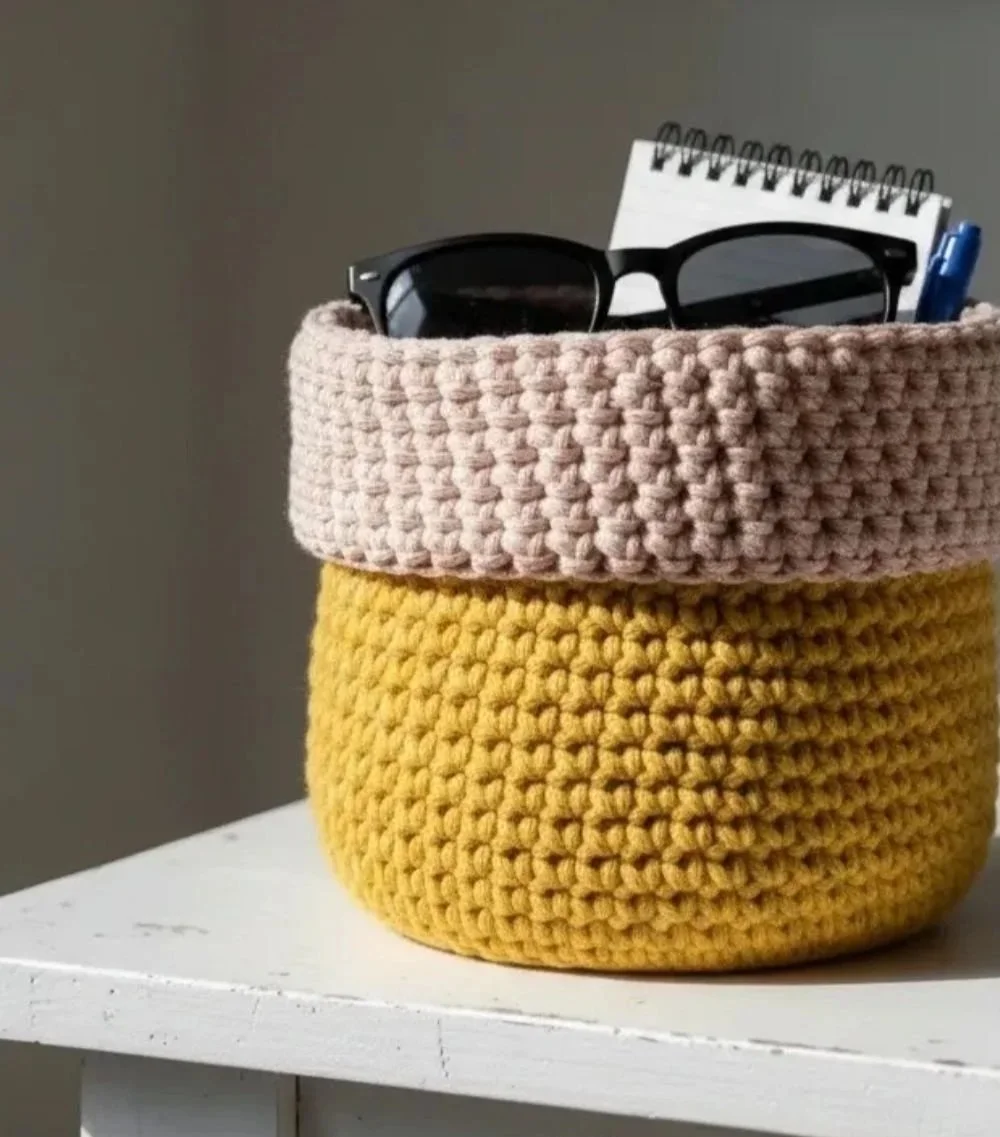
Cotton baskets are crisp, clean, and modern. Wool blends are softer and cosier, inviting touch and use for gentle storage. T-shirt yarn makes bold, chunky statements, perfect for showing off a colourful, playful vibe. Rope yarn gives a structured, with an architectural feel.
The yarn also decides the basket’s purpose.
A rope basket can handle a stack of magazines or laundry, wool blends are better for light, decorative storage, and cotton fits perfectly in areas where washability and strength matter, like kitchens and bathrooms.

My Crochet Essentials
You don't need a huge collection of tools to crochet well. These are the things I reach for most often:
My favourite crochet hooks →
The scissors I always keep in my project bag →
My go-to stitch markers →
A good project bag →
My favourite yarn for home projects →
Common Mistakes to Avoid
Over the years, I’ve learned some lessons about basket-making. Here are the mistakes that cost me time, effort, and sometimes sanity:
Using yarn that’s too thin. Thin yarn is like trying to build a bookshelf out of paper straws — it just doesn’t hold up. The basket might look cute at first, but the walls collapse under weight.
Choosing fuzzy yarns. A haloed or fluffy yarn hides stitch definition, making the basket look messy. Even if the stitches are perfect, the finished piece feels undefined.
Ignoring care instructions. Some yarns shrink or stretch when washed. If your basket is going to hold laundry or toys, always check washability before starting.
Forgetting about weight. Big baskets made with chunky yarn can get heavy fast. I learned this the hard way after filling a large cotton basket with craft supplies — it was unexpectedly heavy and tricky to move.
Using the wrong hook size. Too large a hook spreads the stitches, and the basket loses structure. I often go down a hook size or two to get tighter stitches. Tighter fabric equals sturdier walls, and that makes all the difference. For a guide on choosing hooks for basket projects, see my Crochet Hook Guide.
Texture is what makes a basket look designed.
Waffle, ribbed rims, raised stitches: the stitch you choose changes the whole look. My guide, 5 Crochet Stitches for Modern Homes, walks you through five of my favourites step by step, with ideas for baskets, cushions and more. It's free when you join my weekly email.
Quick Yarn Recommendations (Beginner-Friendly)
If you’re ready to make your first crochet basket, here are some of my go-to yarns:
Lily Sugar’n Cream (cotton): Affordable, strong, and easy to find. Perfect for small baskets.
Hoooked Zpagetti (t-shirt yarn): Chunky, eco-friendly, and works up fast. Great for bold, eye-catching baskets.
Bernat Maker Home Dec (cotton/poly blend): Soft yet structured — a reliable middle ground.
Lion Brand Wool-Ease Thick & Quick (wool blend): Cosy and decorative. Ideal for baskets that hold soft items.
Macrame cord (4–6mm cotton): Industrial strength and sculptural — perfect for large, statement baskets.
For beginners, I recommend starting small.
A desk organizer or a little cotton basket for keys is ideal. Small baskets let you finish quickly, learn how the yarn behaves, and build confidence before taking on larger projects. I often make tiny test baskets first — it’s a fun way to experiment with stitch tension, hook size, and yarn choice without committing hours to a bigger piece.
Picked your yarn?
Here's where I'd put it to work.
The Crochet Home Collection includes two of my sturdy basket patterns, The Flix Waffle Stitch Basket and The Lexi Basket + Plant Pot Cover. It also has four more pieces for your home and a stitch guide, all for $27.
Want to start with just one basket? Crochet A Waffle Stitch Basket That Holds Its Shape is $7.
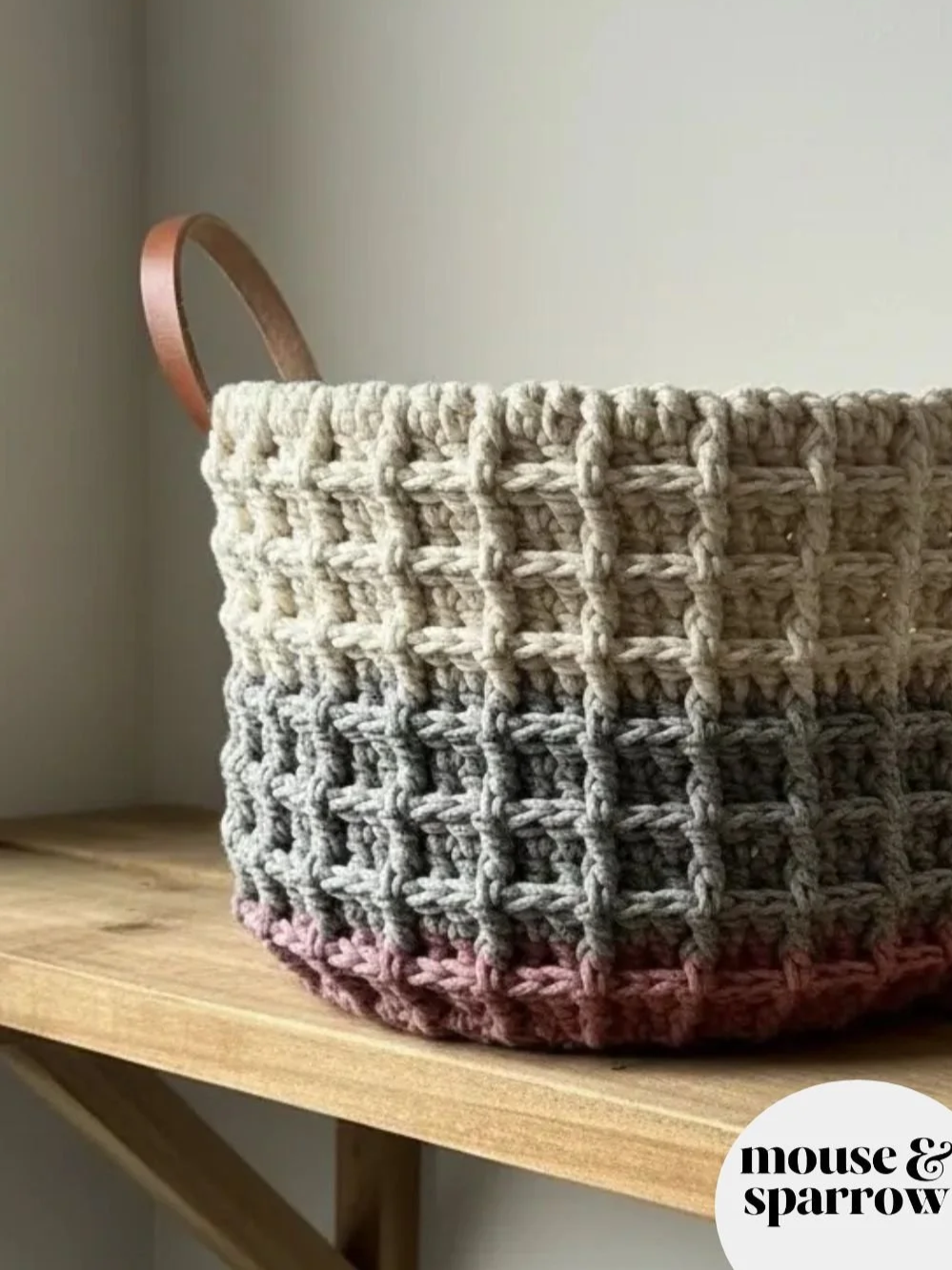
Pick Your Yarn, Make Your Basket
Are you ready to get started?
Grab that cotton, t-shirt yarn, wool, or cord. Pick up your hook.
Start with a small cotton basket this weekend.
What’s Next?
📌 Pin this post: Save this tutorial to your Pinterest boards so you can easily come back to it later.
💬 Leave a comment: I love hearing your feedback.
🧶 Get your next crochet basket pattern
🧶Show Off Your Creation! 🧶
Finished your basket? I’d love to see it! Tag @mouseandsparrow on Instagram.
More inspiring posts

Looking for a modern crochet pillow cover pattern with a little personality? Meet the Nixie Pillow, featuring a classic granny-square back and a distinctive chain-link detail on the front. Discover how thoughtful textures and simple design choices can turn a handmade cushion into a beautiful statement piece for your home.