
Beautiful, Eco-Friendly Yarns You’ll Love to Work With
This post contains affiliate links.
Caring for the planet shouldn’t mean scratchy yarns, muted colours, or settling for “good enough.” This curated list of eco-friendly yarns focuses on natural, non-toxic fibres that feel beautiful to work with and look just as good in the finished piece — so you can crochet with confidence, style, and a clear conscience.
Pin this post for later!
When I first started exploring sustainable yarns, it often felt like the assumption was I wanted to dye my own skeins with foraged berries. If that’s your thing — brilliant. But many of us care deeply about materials and the planet and want our projects to look current, polished, and intentional.
This curated list focuses on yarns that meet my standards: naturally derived, free from harsh chemicals, and genuinely better for both makers and the environment. No greenwashing — just honest guidance to help you choose yarns you’ll actually enjoy working with.
What You’ll Find in This Guide
Organic Cotton
Recycled Cotton
Hemp
Linen
Bamboo & Lyocell
Specialty Plant Fibres
Organic & Ethical Animal Fibres
Yarn Categories
1. ORGANIC COTTON
✓ Beginner-friendly: Yes — works exactly like conventional cotton
✓ Best first purchase: E-Verse or About String Organic Cotton
✓ Learning curve: None
🌱 Sustainability level: ★★★★★
Best for:
Baby items, summer garments, wearables, anything worn against the skin
❌ Not ideal for:
Super drapey shawls or projects that need fluid movement
Recommended Brands:
▶E-Verse Organic Cotton
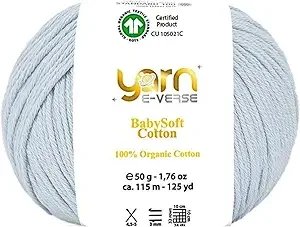
E-verse - Organic Cotton
▶ E-Verse Organic Cotton
Fibre: 100% GOTS-certified organic cotton
🌱 Sustainability level: ★★★★★
Why I recommend it:
E-Verse Organic Cotton is reliably soft, smooth, and easy to work with — without any of the stiffness or squeak you sometimes get with conventional cotton. It’s hypoallergenic, free from toxic pesticides, and gentle on sensitive skin, making it a stress-free choice for everyday crochet.
What it’s like to work with:
Matte finish with clean stitch definition
No splitting or slipping
Consistent, predictable tension
Best for:
Amigurumi, baby items, lightweight garments, toys, accessories
❌ Not ideal for:
Very drapey shawls or projects that need fluid movement
▶Debbie Bliss Eco Baby
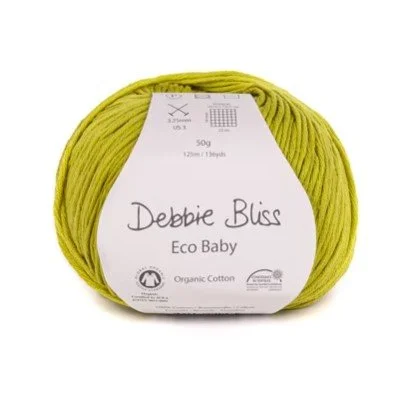
Debbie Bliss Eco Baby
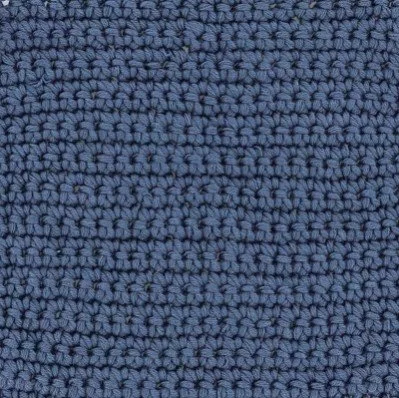
Debbie Bliss Eco Baby
▶Debbie Bliss Eco Baby
Fibre: 100% organic cotton
🌱 Certifications: GOTS & OEKO-TEX Standard 100
🌱 Sustainability level: ★★★★★
Why I recommend it:
Debbie Bliss Eco Baby is exceptionally soft and consistently smooth, making it ideal for baby items and sensitive skin. The colour palette feels modern and considered — not overly “nursery” — which makes it great for heirloom-quality makes.
What it’s like to work with:
Smooth, even texture
Excellent stitch definition without stiffness
Best for:
Baby blankets, clothing, toys, heirloom gifts, lightweight garments
❌ Not ideal for:
Heavy-duty home décor, bags, or projects needing structure
▶About String Organic Cotton
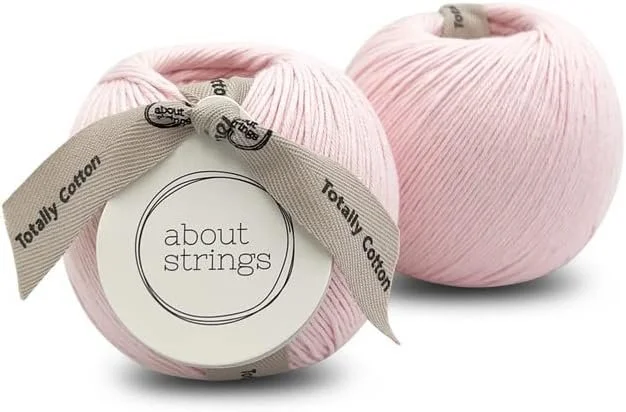
▶ About String Organic Cotton
Fibre: 100% GOTS-certified organic cotton
🌱 Sustainability level: ★★★★★
🌱 Brand: About String
Why I recommend it:
About String Organic Cotton stands out for its exceptional softness and wearable drape, making it ideal for projects worn directly against the skin. It’s grown and spun in Turkey using renewable energy and comes in a thoughtfully curated colour palette, including both contemporary shades and natural undyed options.
What it’s like to work with:
Smooth, soft hand-feel with gentle drape
Refined stitch definition without stiffness
Available weights:
Fingering, sport, DK, and worsted
Best for:
Baby items, garments, accessories, and skin-contact projects
❌ Not ideal for:
Very structured designs, bags, or projects needing firm shape retention
Personal note: I made a baby blanket with organic cotton for my son. Years and many washes later, — no pilling, no shrinkage, just softens more with each wash. Worth the investment for items that need to last. About String Organic Cotton is soft to touch, beautiful to work with and perfect for baby items. And the colours are a dream.
2. RECYCLED COTTON
✓ Beginner-friendly: Yes — behaves like regular cotton with a slightly more textured feel
✓ Best first purchase: DMC Eco Vita or Paintbox Recycled Cotton Worsted
✓ Learning curve: Minimal — natural texture variation adds character, not difficulty
🌱 Sustainability level: ★★★★★
Best for:
Home décor, bags, blankets, macramé, sturdy everyday projects
❌ Not ideal for:
Very smooth, high-definition stitch patterns or ultra-light garments
Recommended Brands:
▶Paintbox Yarns Recycled Cotton Worsted
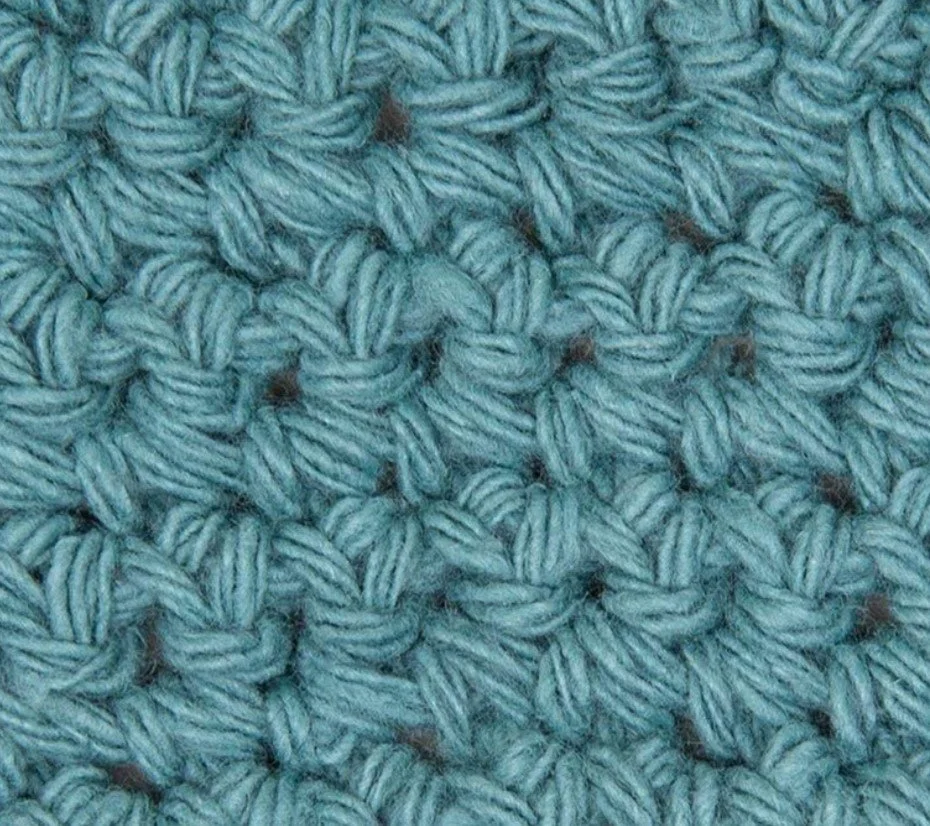
Paintbox Recycled Cotton
▶ Paintbox Yarns Recycled Cotton Worsted
Fibre: Recycled cotton
🌱 Certification: OEKO-TEX® Standard 100
🌱 Sustainability level: ★★★★★
Why I recommend it:
Paintbox Recycled Cotton Worsted is a great choice if colour matters to you. It offers excellent stitch definition and a wide, modern palette — including on-trend neutrals — making it especially well suited to home décor and practical projects.
What it’s like to work with:
Smooth texture with clear, even stitches
Holds its shape well for structured makes
Best for:
Tote bags, cushions, baskets, storage, and everyday home accessories
❌ Not ideal for:
Garments needing drape, lightweight accessories, or ultra-soft baby items
▶GANXXET Zero Waste Cotton
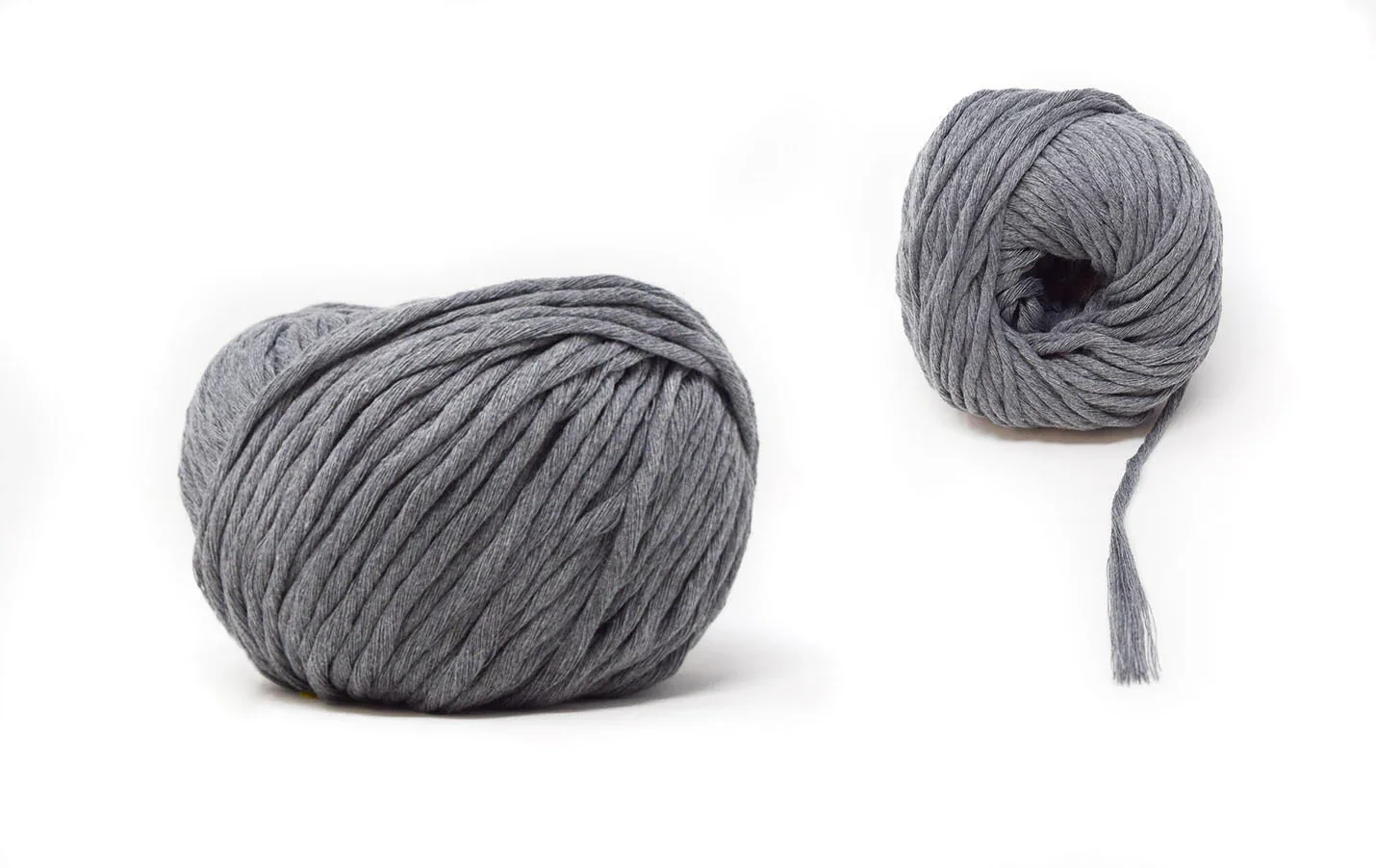
GANXXET Zero Waste Cotton
▶ GANXXET Zero Waste Cotton
Fibre: 100% recycled cotton
🌱 Certifications: Global Recycled Standard (GRS), OEKO-TEX® Standard 100, REACH
🌱 Sustainability level: ★★★★★
Why I recommend it:
GANXXET Zero Waste Cotton is made entirely from recycled textile waste and left undyed, retaining its original colour. It’s one of the most genuinely low-impact cotton options available and is designed specifically for projects where structure and durability matter.
What it’s like to work with:
Firm, sturdy feel with minimal stretch
Consistent thickness across cords and yarn weights
Available formats:
Cords and multiple yarn weights
Best for:
Rugs, baskets, floor cushions, wall hangings, large home décor projects
❌ Not ideal for:
Garments, soft accessories, or projects needing drape or elasticity
▶ DMC Eco Vita
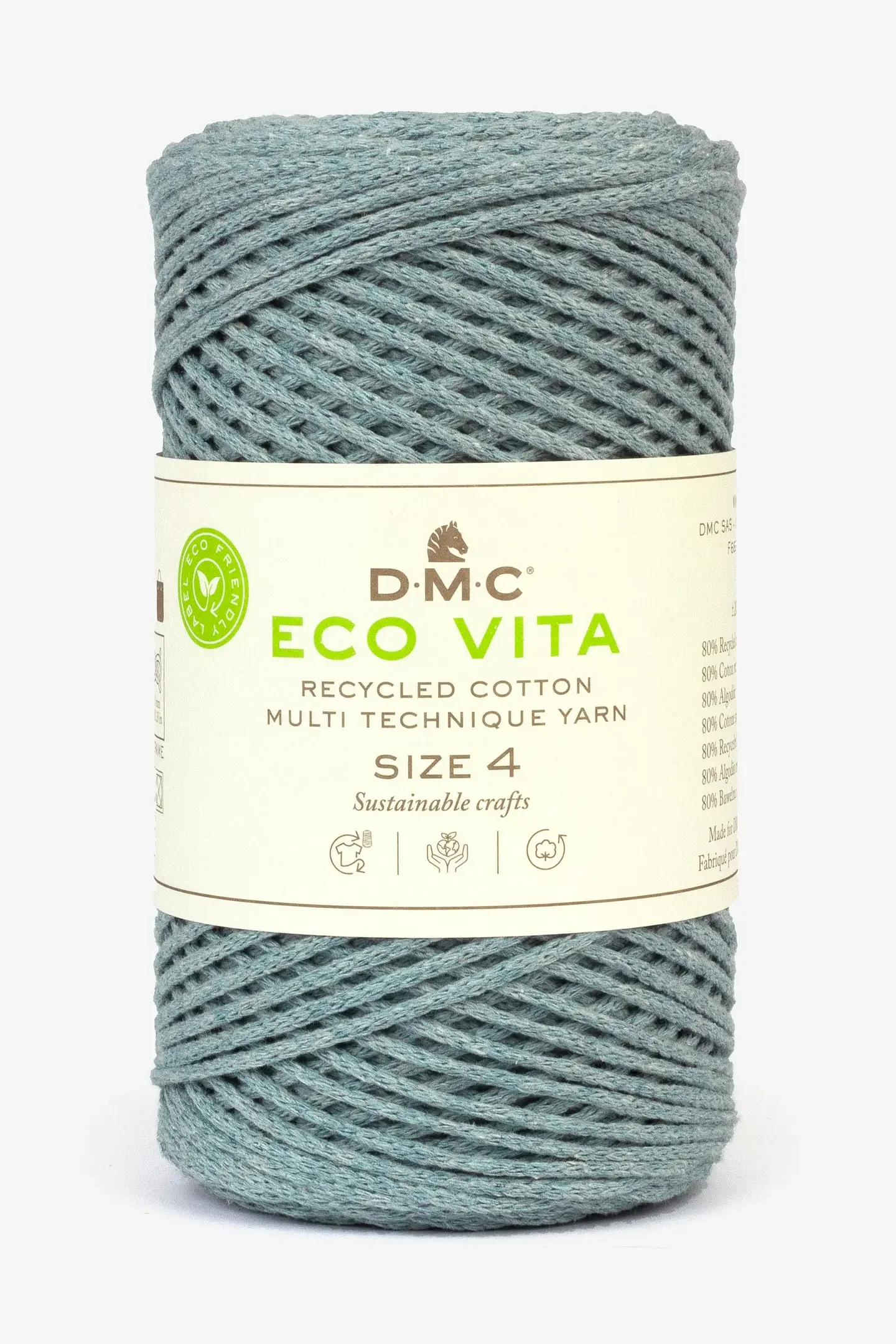
DMC Eco Vita in Grey
▶ DMC Eco Vita
Fibre: 100% recycled cotton
🌱 Certification: OEKO-TEX® Standard 100
🌱 Sustainability level: ★★★★★
Why I recommend it:
DMC Eco Vita is one of my personal favourites for its exceptional consistency and versatility. Made from pre-consumer textile waste, it has a beautiful matte finish and clear stitch definition — a recycled cotton that doesn’t feel like a compromise.
What it’s like to work with:
Smooth, even texture with reliable tension
Soft enough for wearables, sturdy enough for structured projects
Weight:
DK (a true all-rounder)
Best for:
Garments, accessories, bags, cushions, and home décor
❌ Not ideal for:
Ultra-light lace projects or designs needing very fluid drape
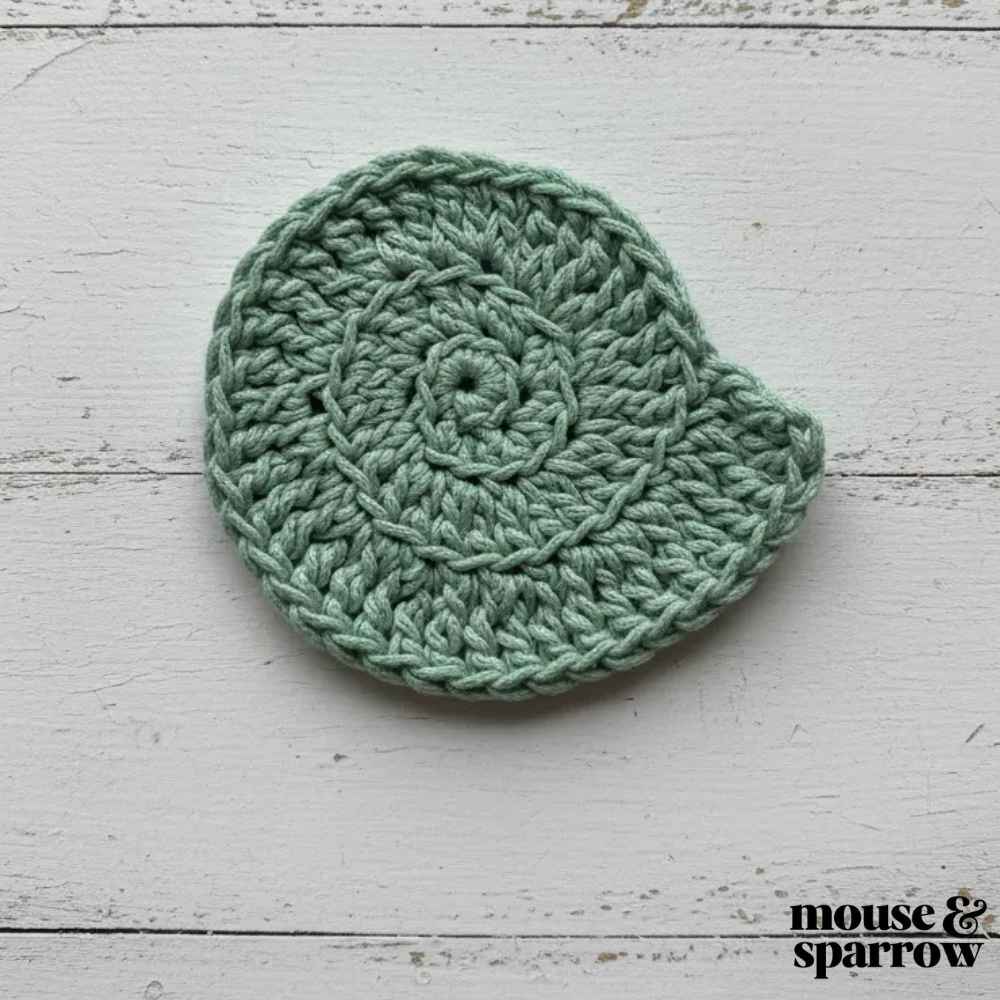
DMC Eco Vita Yarn - Shell Shaped Coaster
Personal note: I use a lot recycled cotton yarn for my projects. DMC Eco Via is one of my favourites, it does not spilt, give your works structure and it holds up beautifully in the wash — my market bag is going on year two with weekly use and still looks great. The stitch definition is crisp enough that your work actually looks as good as the pattern photo.
3. HEMP
✓ Beginner-friendly: Moderate — initial stiffness takes a little getting used to
✓ Best first purchase: Hemptique (US) or Natissea Damya (EU)
✓ Learning curve: Medium — start with structured projects like bags rather than garments
🌱 Sustainability level: ★★★★★
Best for:
Bags, market totes, home accessories, textured projects, anything that benefits from structure
❌ Not ideal for:
Flowy garments, delicate shawls, or projects that need instant softness
Recommended Brands:
▶Natissea Hemp Collection (Pernelle, Damya, Merlin)
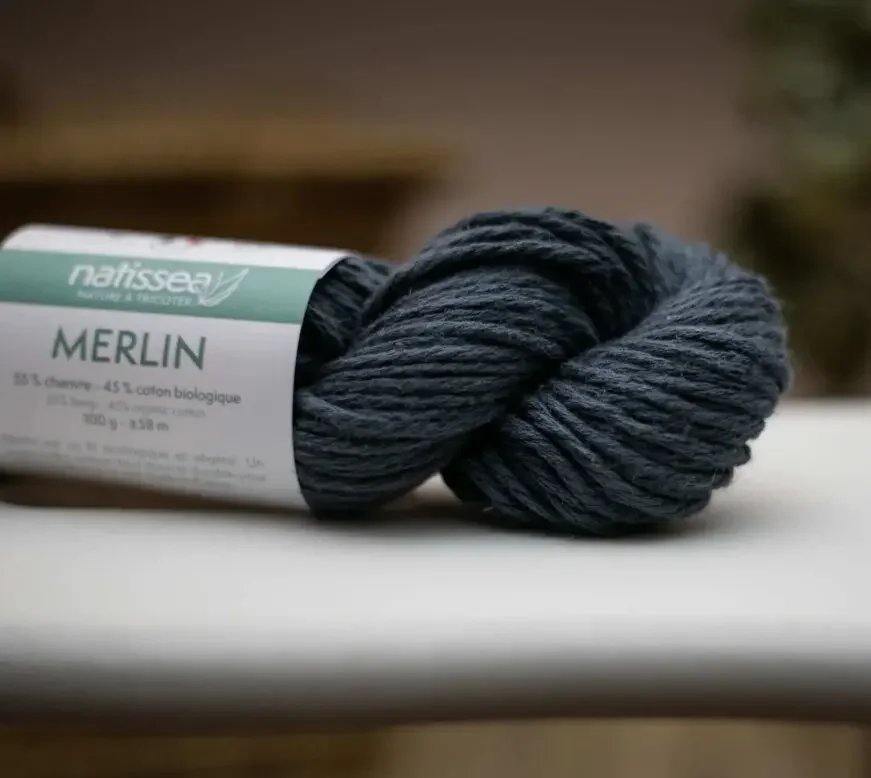
Natissea Hemp Merlin
▶ Natissea Hemp Collection (Pernelle, Damya, Merlin)
Fibre: Hemp and hemp blends
🌱 Certifications: GOTS & OEKO-TEX®
🌱 Sustainability level: ★★★★★
Why I recommend it:
Natissea is a French small business specialising in beautifully produced hemp yarns made with Romanian hemp. Their yarns balance strong eco credentials with refined colour palettes, making hemp feel modern, intentional, and wearable.
What it’s like to work with:
Firm, structured feel that softens with use
Excellent stitch definition
Natural texture without feeling coarse
Available options:
Pernelle: 100% hemp
Damya: Hemp blends (including hemp/linen and hemp/organic cotton)
Merlin: Structured hemp for sturdier projects
Best for:
Bags, market totes, home accessories, textured garments, projects needing structure
❌ Not ideal for:
Ultra-drapey garments, delicate shawls, or projects needing instant softness
Note: Hemp softens beautifully with washing and wear. Initial stiffness is normal and desirable for structured items.
▶Hemptique
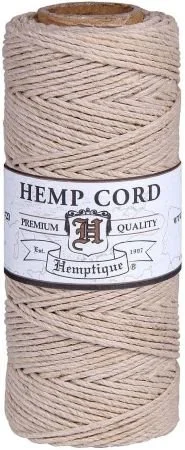
▶ Hemptique
Fibre: 100% hemp and hemp blends
🌱 Sustainability level: ★★★★★
Why I recommend it:
Hemptique specialises in pure hemp yarns and hemp blends designed to be approachable and versatile. With a wide range of weights and textures, it’s an excellent entry point if you’re curious about hemp but unsure where to start.
What it’s like to work with:
Firm, durable feel typical of hemp
Available in both natural undyed and beautifully coloured options
Different textures suited to different project styles
Available weights:
From lace to bulky, depending on the yarn
Best for:
Market bags, textured home décor, durable accessories, eco-conscious everyday projects
❌ Not ideal for:
Ultra-soft garments, fluid drape, or projects that need stretch and elasticity
Personal note: Yes, it starts stiff. But after 2-3 washes, my hemp tote bag became genuinely soft while keeping its structure. Now it's my favorite — holds shape beautifully, gets better with age. Just don't expect immediate softness on day one.
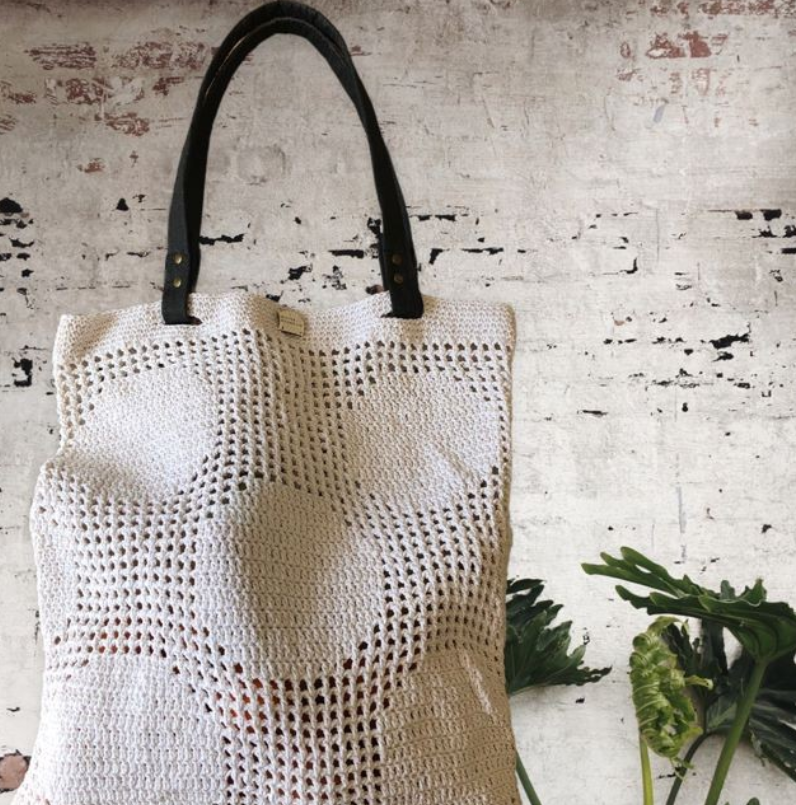
I made this crochet market bag with Hemp Yarn from Hemptique
4. LINEN
✓ Beginner-friendly: Moderate — slippery at first but very rewarding
✓ Best first purchase: Lotus Yarns or Katia Lino
✓ Learning curve: Medium — excellent stitch definition shows every stitch (great for improving technique)
🌱 Sustainability level: ★★★★☆
Best for:
Summer garments, accessories, projects that benefit from drape, heirloom-quality pieces
❌ Not ideal for:
Very tight stitches, highly textured patterns, or anyone wanting instant softness
Recommended Brands:
▶Lotus Yarns
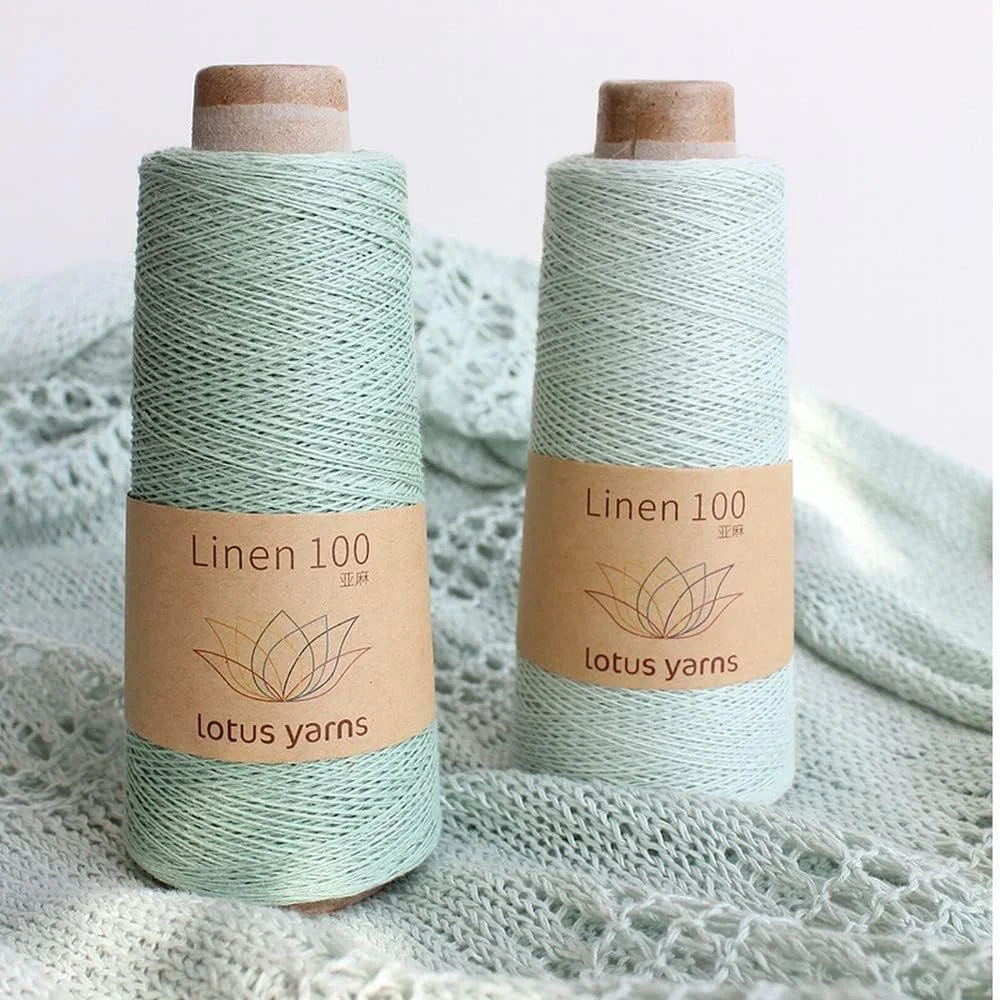
▶ Lotus Yarns Linen
Fibre: 100% natural linen
🌱 Sustainability level: ★★★★☆
Why I recommend it:
Lotus Yarns Linen is a long-yardage, breathable linen yarn that’s ideal for lightweight, warm-weather projects. It starts out crisp and structured, then softens beautifully with wear and washing — exactly what you want from quality linen.
What it’s like to work with:
Firm, smooth feel with excellent stitch definition
Breathable and comfortable in warm weather
Softens gradually over time
Best for:
Coasters, lace patterns, summer tops, vests, shawls, cardigans, lightweight accessories
❌ Not ideal for:
Beginner projects, very tight stitches, or anyone wanting instant softness
▶Katia Lino Linen Yarn
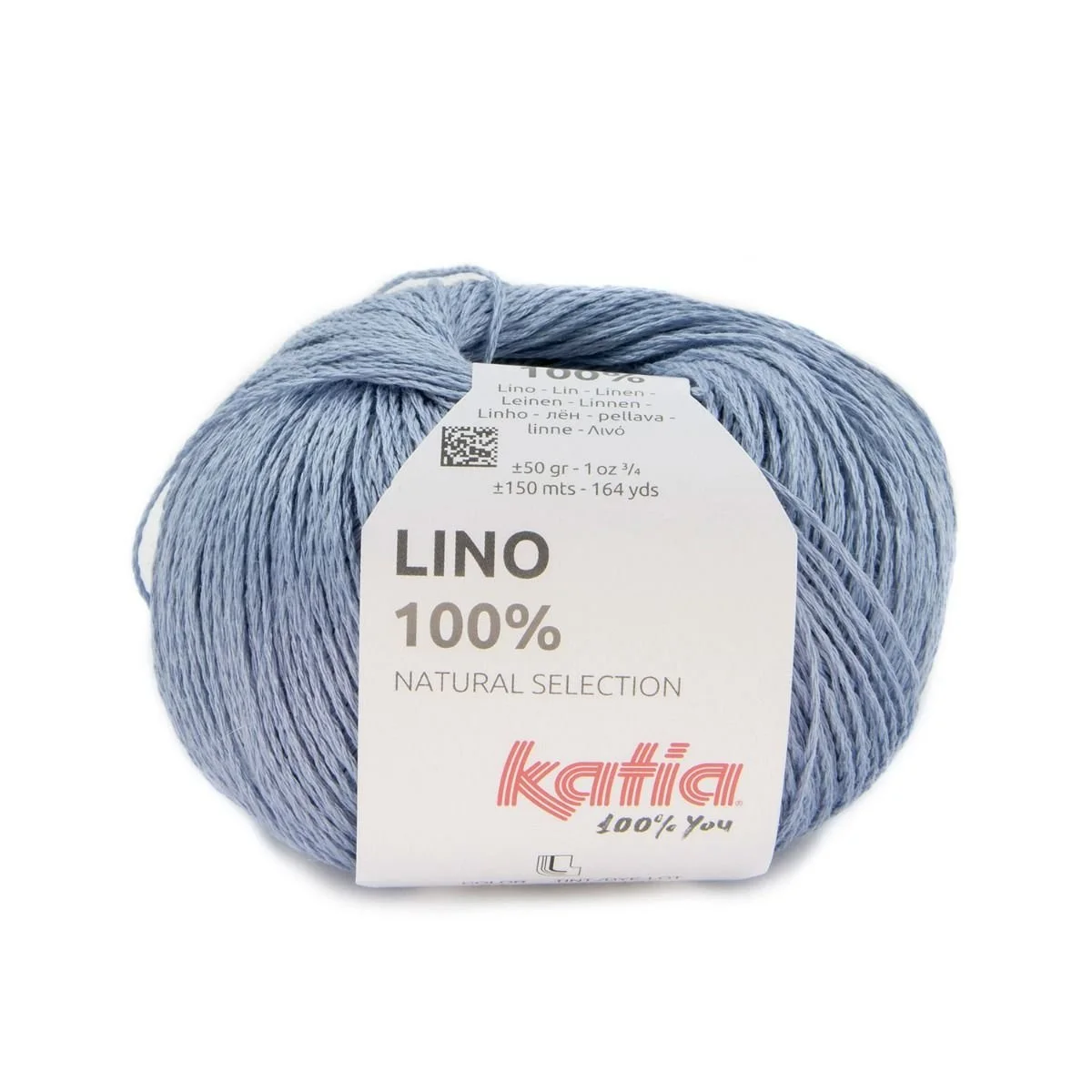
Katia Lino Linen Yarn in Jeans
▶ Katia Lino Linen Yarn
Fibre: 100% linen
🌱 Sustainability level: ★★★★☆
Why I recommend it:
Katia Lino is a crisp, breathable linen yarn that works beautifully for lightweight garments and summer accessories. Its ball format and straightforward care make it a more approachable option if you’re new to working with linen but want that classic, polished finish.
What it’s like to work with:
Smooth, structured feel with clean stitch definition
Holds shape well in openwork and simple stitches
Best for:
Lightweight garments, summer tops, shawls, bags, hats, and openwork designs
❌ Not ideal for:
Beginner projects, very dense stitches, or anyone expecting instant softness
Personal note: Fair warning: linen is slippery to work with at first. But the finished fabric? Incredible. My linen scarf from three summers ago still looks fresh, and the more I wear it, the softer it gets. It's an investment of time and money that pays off.
5. BAMBOO & LYOCELL
✓ Beginner-friendly: Moderate — beautiful drape but can split if tension is uneven
✓ Best first purchase: GANXXET Bamboo Deluxe
✓ Learning curve: Medium — use smooth hooks, maintain even tension, avoid very tight stitches
🌱 Sustainability level: ★★★★☆
⚠️ Important note:
Only bamboo lyocell or viscose produced with closed-loop processing is genuinely eco-friendly. Conventional bamboo rayon often relies on harsh chemicals and should be avoided.
Best for:
Drapey garments, summer wear, soft accessories, projects where fluid movement matters
❌ Not ideal for:
Structured items, firm stitch definition, or beginners who struggle with slippery yarns
Recommended Brands:
▶GANXXET Bamboo Deluxe
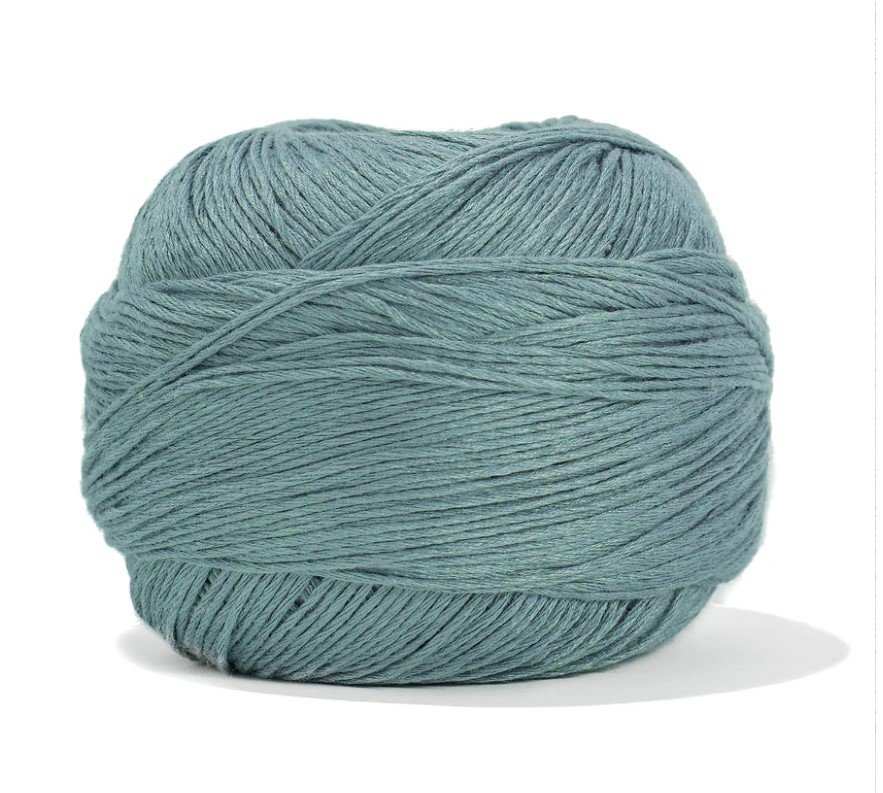
▶ GANXXET Bamboo Deluxe
Fibre: Viscose made from bamboo
🌱 Certifications: GOTS, Detox to Zero by OEKO-TEX®
🌱 Sustainability level: ★★★★☆
Why I recommend it:
GANXXET Bamboo Deluxe is one of the few bamboo-based yarns with clear, transparent certifications. Its GOTS and Detox to Zero standards help ensure responsible processing, making it a safer choice in a fibre category that often lacks oversight.
What it’s like to work with:
Smooth, soft feel with gentle drape
Produces clean, elegant stitches
Sport weight ideal for warm-weather makes
Best for:
Summer tops, lightweight garments, soft accessories
❌ Not ideal for:
Structured projects or beginners who struggle with slippery yarns
▶Wool and the Gang Tina Tape (Tencel)
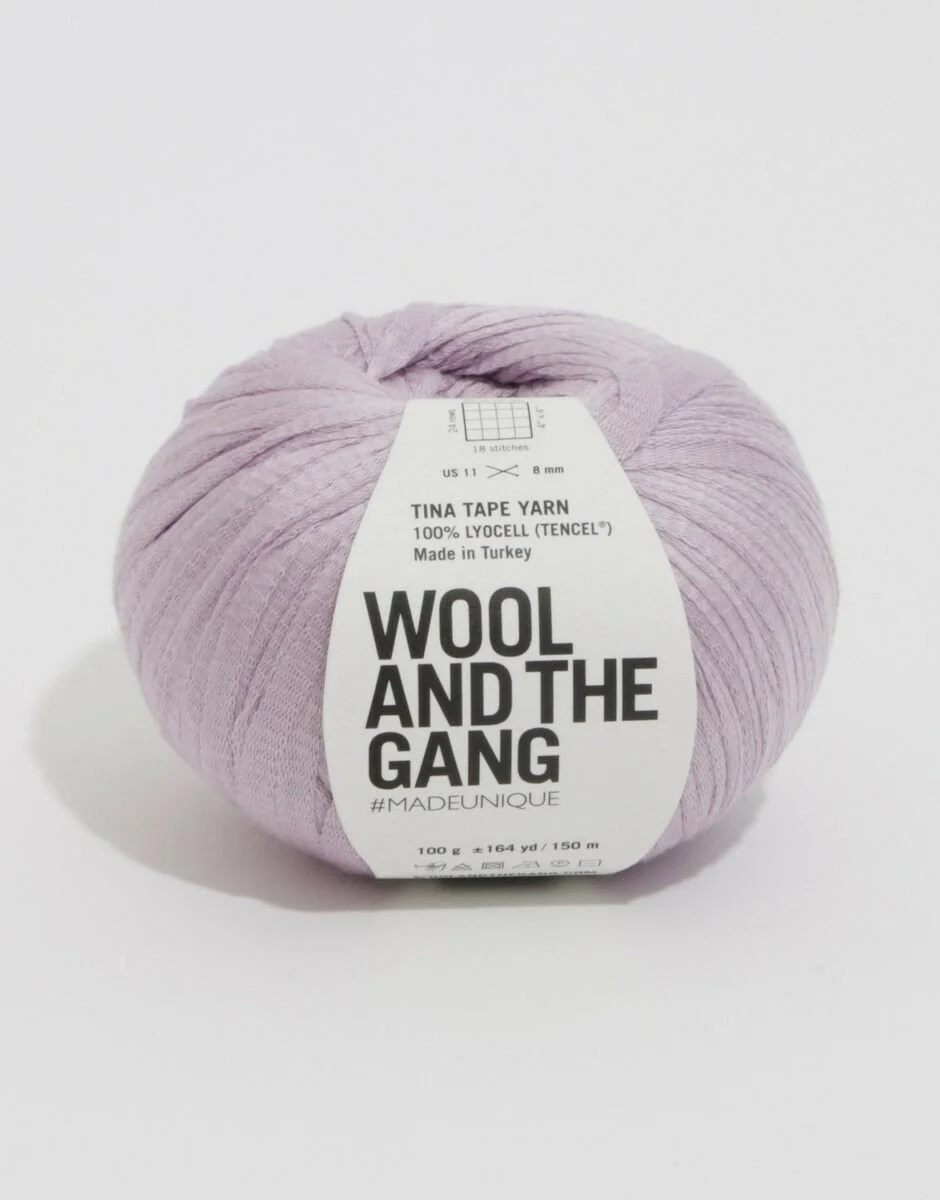
▶ Wool and the Gang Tina Tape (TENCEL™)
Fibre: TENCEL™ made from eucalyptus fibre
🌱 Sustainability level: ★★★★☆
Why I recommend it:
Tina Tape is a design-forward TENCEL™ yarn made from eucalyptus fibre and produced using renewable energy. Its flat tape construction creates clean lines and subtle structure, making it ideal for modern crochet projects where shape and silhouette matter.
What it’s like to work with:
Flat tape construction with crisp stitch definition
Lightweight but more structured than typical drapey yarns
Holds shape well in simple, graphic stitches
Best for:
Contemporary garments, structured tops, modern silhouettes, statement crochet pieces
❌ Not ideal for:
Lacework, fluid drape, or highly textured stitch patterns
Personal note: I made a summer cardigan with bamboo lyocell last year. It drapes beautifully and keeps me genuinely cool, but fair warning: it can split while working if you're heavy-handed. Use a smooth hook (not wood) and watch your tension. The finished result is worth the learning curve.
6. SPECIALTY PLANT FIBRES
For the adventurous crafter
Nettle
✓ Beginner-friendly: No — challenging texture and irregular spin
✓ Best first purchase: Skip unless you’re feeling adventurous or already confident with fibre experimentation
✓ Learning curve: High — better suited to weaving, mixed-media, or experimental crochet
🌱 Sustainability level: ★★★★★
Best for:
Weaving, bags, accessories, mixed-fibre projects, experimental or textural work
❌ Not ideal for:
Beginner crochet, soft garments, or projects that need uniform stitch consistency
Recommended Brands:
▶Conserving Threads Natural Nettle
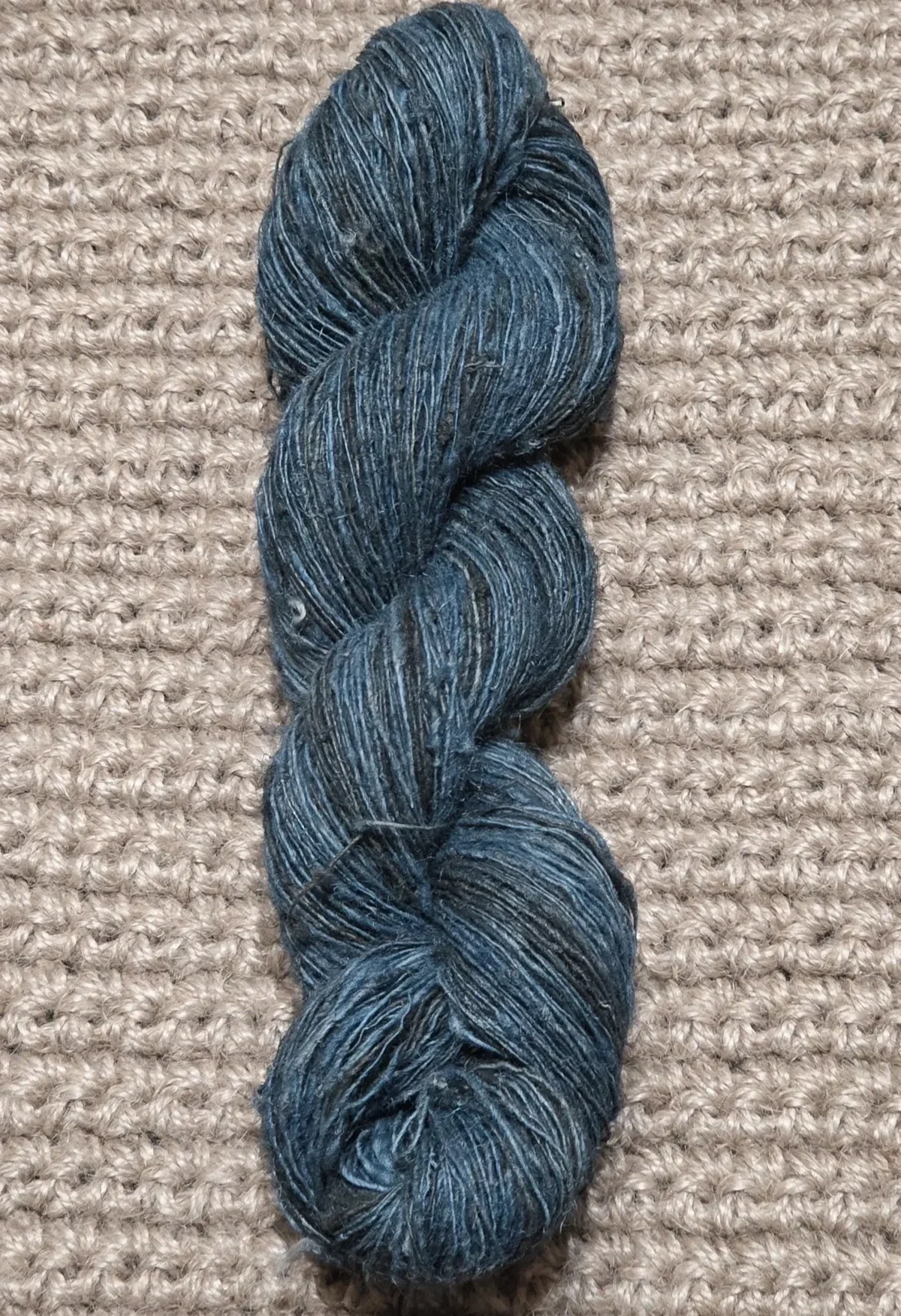
Conserving Threads - Yarn Nettle - Blue
▶ Conserving Threads Natural Nettle
Fibre: 100% natural nettle
🌱 Sustainability level: ★★★★★
Why I recommend it:
Conserving Threads Natural Nettle is a traditional, hand-spun fibre made in the Himalayan region of India using locally harvested nettles. It’s a low-impact, heritage yarn that prioritises craft and sustainability over uniformity — best approached as a material-led, experimental choice.
What it’s like to work with:
Hand-spun texture with natural variation
Strong, slightly rustic feel
Best for:
Textured projects, rustic accessories, weaving, mixed-fibre work, statement pieces
❌ Not ideal for:
Beginner crochet, smooth garments, or projects needing perfectly even stitches
Personal note: I’ll be honest — I tried nettle yarn once and found it challenging to work with. The hand-spun texture is quite uneven, which creates beautiful rustic texture but makes consistent tension tricky. In my experience it’s better suited to weaving, wall hangings, baskets, or very textured crochet pieces rather than projects where you want a smooth, even finish.
Raffia
✓ Beginner-friendly: Yes for structured projects, no for drapey designs
✓ Best first purchase: Wool and the Gang Ra-Ra Raffia
✓ Learning curve: Low — excellent stitch definition and very forgiving for bags
🌱 Sustainability level: ★★★★☆
Best for:
Bags, hats, baskets, home décor, projects that need structure and shape
❌ Not ideal for:
Garments, soft accessories, or anything requiring drape or stretch
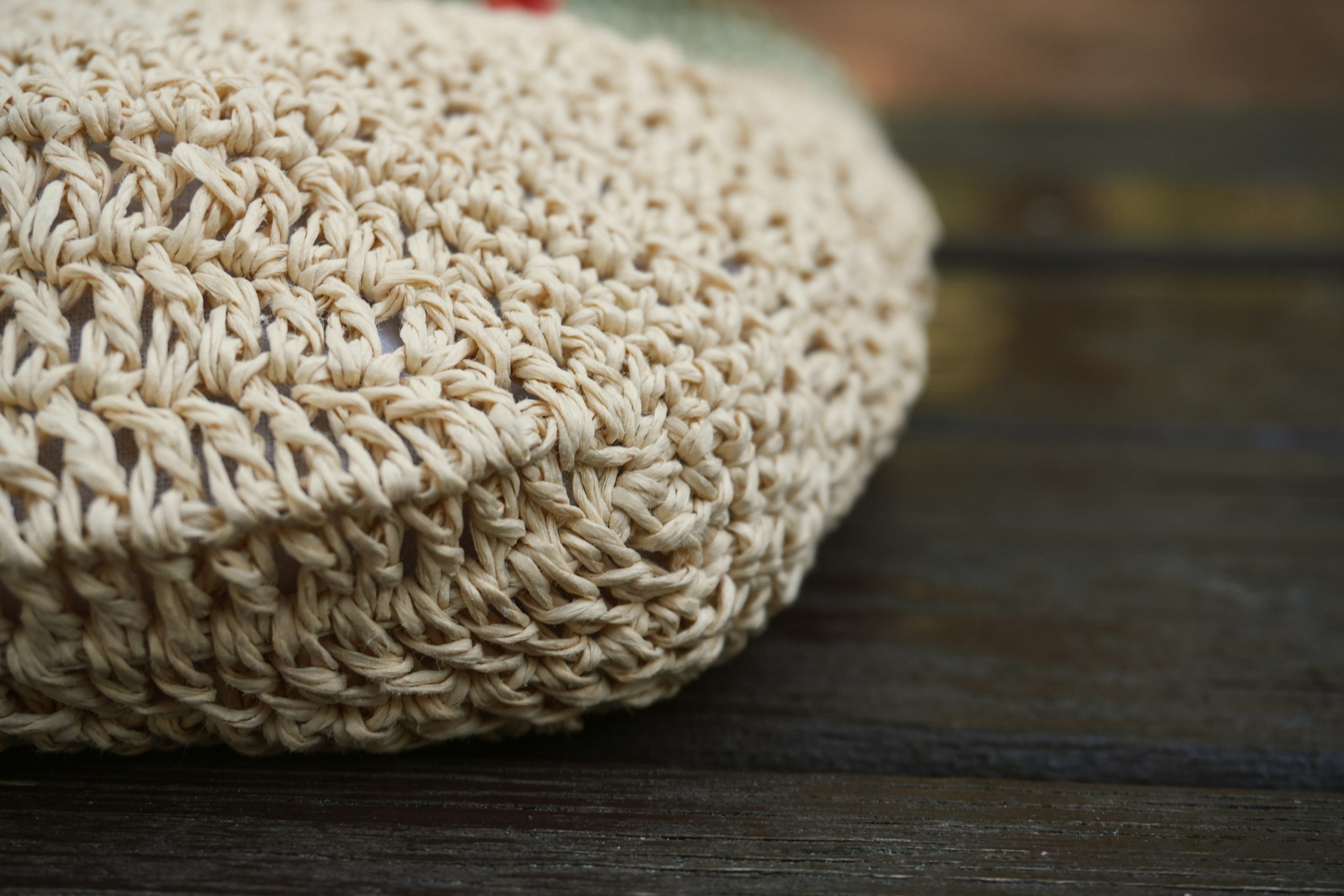
Raffia yarn is a plant-based fibre made from the leaves of the raffia palm. It’s renewable, biodegradable, and prized for its naturally crisp structure — which is exactly why it works so well for projects that need to hold their shape.
Raffia isn’t soft or stretchy, but its firm, papery texture creates lightweight pieces with excellent structure and clean stitch definition, especially for warm-weather makes.
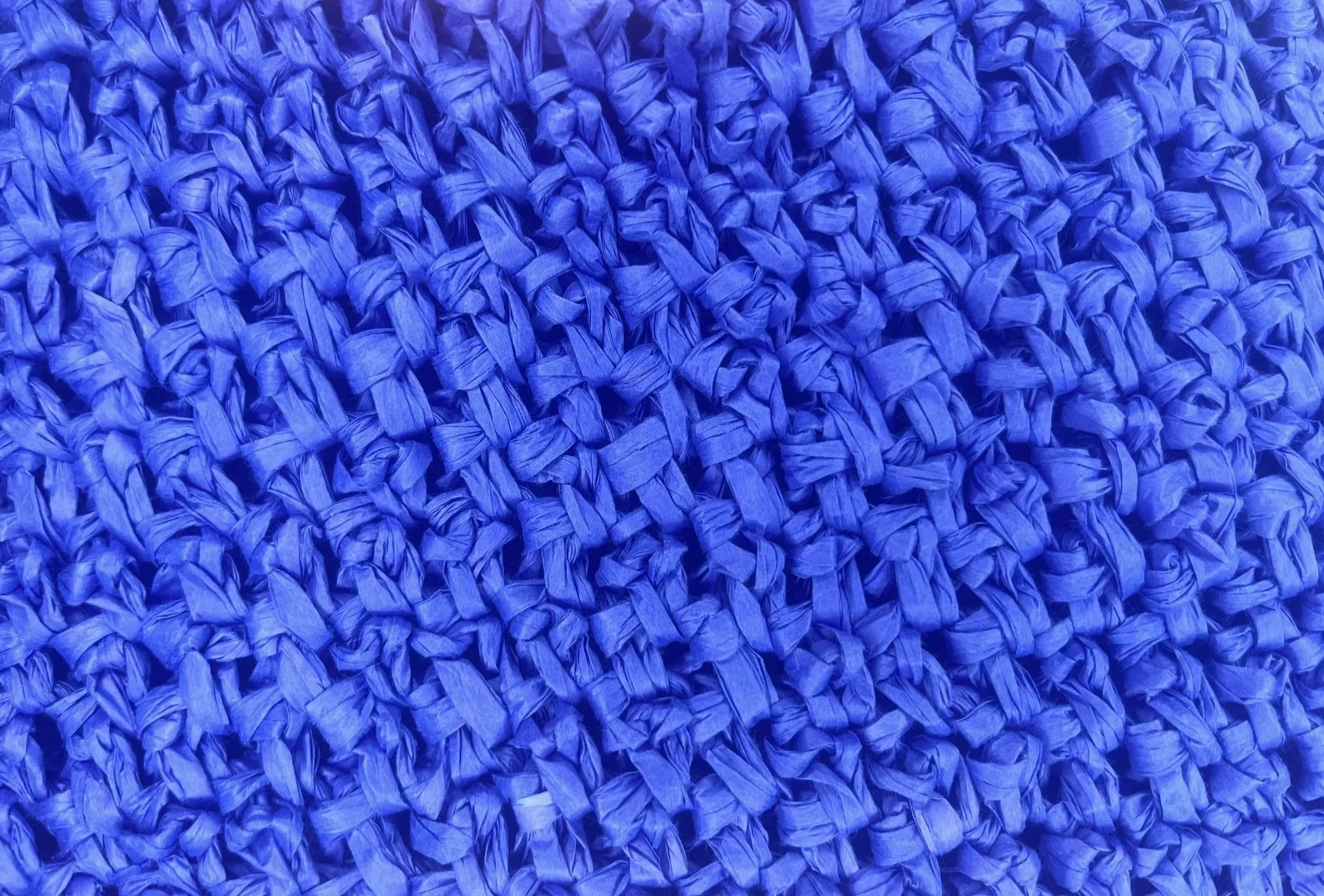
Close up of a Raffia Bag I made a while ago.
Recommended Brands:
▶Wool and the Gang Ra-Ra Raffia
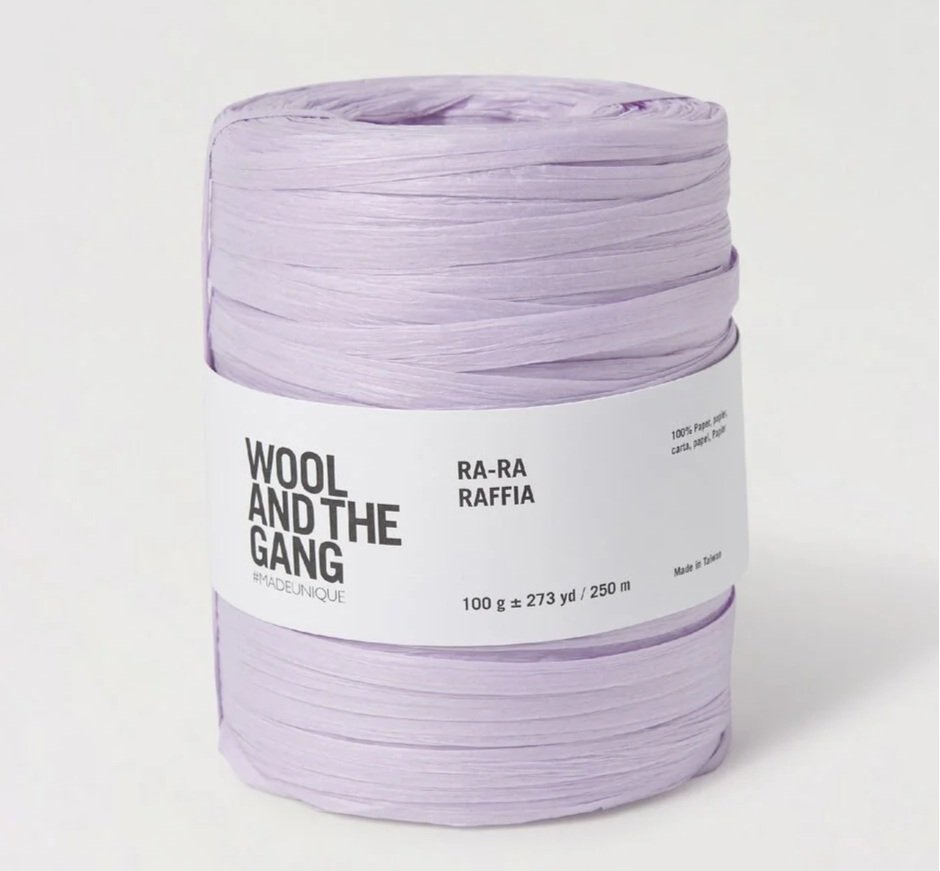
Wool and the gang - Ra-Ra Raffia - Lilac Powder
▶ Wool and the Gang Ra-Ra Raffia
Fibre: Raffia made from wood pulp
🌱 Certifications: REACH & FSC
🌱 Sustainability level: ★★★★☆
Why I recommend it:
Ra-Ra Raffia is a reliable choice for summer accessories that need structure and visual impact. Made from FSC-certified wood pulp, it’s designed specifically for warm-weather projects where shape and durability matter.
What it’s like to work with:
Crisp, structured texture that holds its form
Excellent stitch definition
Easy to handle for bags and accessories
Best for:
Summer bags, hats, baskets, coastal-inspired projects, statement accessories
❌ Not ideal for:
Garments, soft drape, or projects needing flexibility
Personal note: I made a beach bag with this last summer and it’s held its shape beautifully — through sandy beach days, being stuffed with towels, and getting wet from swim gear. The natural stiffness is a feature here, not a bug. It isn’t soft, but it’s structural, which is exactly what you want in a bag that needs to stand up and keep its form.
Jute
✓ Beginner-friendly: Yes — sturdy, predictable, and forgiving
✓ Best first purchase: Hoooked Jute
✓ Learning curve: Low — rough on hands, but technically very easy to work with
🌱 Sustainability level: ★★★★☆
Best for:
Market bags, plant hangers, baskets, rugs, rustic home décor
❌ Not ideal for:
Wearables, soft accessories, or projects that touch sensitive skin
Jute yarn is a tough, plant-based fibre known for its rustic texture and exceptional durability. It’s grown with very low water requirements and minimal chemical inputs, making it a strong choice for eco-minded makers working on hard-wearing projects.
Jute isn’t soft, but its coarse, sturdy texture creates pieces with excellent grip and structure — ideal when strength and longevity matter more than comfort.
Recommended Brands:
▶Hoooked Jute

Hoooked - Tossa - 100% Natural Jute Tea Rose
▶ Hoooked Jute
Fibre: 100% natural jute
🌱 Sustainability level: ★★★★☆
Why I recommend it:
Hoooked Jute is a tough, biodegradable plant fibre made for projects where strength and texture matter more than softness. It’s unapologetically rustic — perfect for bold, durable makes.
What it’s like to work with:
Rough-textured, sturdy fibre with minimal stretch
Holds knots and structure extremely well
Best for:
Macramé, plant hangers, baskets, rugs, home décor, statement pieces
❌ Not ideal for:
Wearables, soft accessories, or projects touching sensitive skin
Personal note: I’m a big fan of jute — it’s sturdy, naturally textured, and holds knots beautifully. I wouldn’t use it for anything that touches skin regularly, though. Know its lane: rustic, structural, decorative.
▶Seaweed
✓ Beginner-friendly: Yes — typically blended with cotton or other fibres for easy handling
✓ Best first purchase: Hoooked Atlantica SeaCell® Cotton
✓ Learning curve: Low — behaves much like smooth cotton blends
🌱 Sustainability level: ★★★★☆
Best for:
Wearables, baby items, summer garments, projects where softness and skin comfort matter
❌ Not ideal for:
Very structured items, rustic textures, or ultra-firm stitch definition
Seaweed yarn is a blended fibre made by combining processed seaweed cellulose with fibres like cotton or lyocell. It’s prized for its smooth, breathable feel and soft, slightly silky texture — making it well suited to finer, touchable projects.
Seaweed yarns are almost always blends, which helps balance softness with strength and makes them easier to work with than you might expect.
Recommended Brands:
▶Hoooked Atlantica SeaCell Cotton
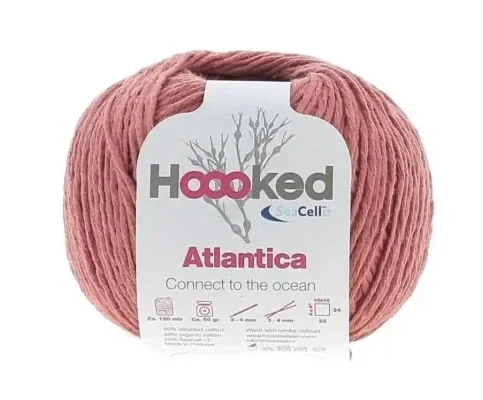
Hoooked - Atlantica SeaCell - Lobster Red
▶ Hoooked Atlantica SeaCell™ Cotton
Fibre: Cotton blend with SeaCell™ seaweed fibre (including organic cotton)
🌱 Certification: SeaCell™
🌱 Sustainability level: ★★★★☆
Why I recommend it:
Hoooked Atlantica SeaCell™ Cotton blends cotton with certified SeaCell™ fibre made from seaweed, creating a lightweight yarn with a cool, smooth feel. It’s an excellent choice for warm-weather projects where softness and breathability matter most.
What it’s like to work with:
Light, smooth texture with a cool hand-feel
Produces clean, relaxed stitches
Best for:
Wearables, summer tops, lightweight garments, accessories, skin-friendly projects
❌ Not ideal for:
Very structured items, heavy bags, or projects needing firm stitch definition
7. ORGANIC & ETHICAL ANIMAL FIBRES
Organic Wool
✓ Beginner-friendly: Yes — elastic, forgiving, and easy to work with
✓ Best first purchase: Kremke Soul Wool Organic Merino
✓ Learning curve: Low — wool’s natural elasticity helps hide small tension inconsistencies
🌱 Sustainability level: ★★★★☆
Best for:
Cold-weather wearables, children’s items, accessories, toys, projects that need warmth and stretch
❌ Not ideal for:
Hot-weather garments, vegan projects, or people with wool sensitivities
⚠️ Important note:
Not all wool is created equal. Look for certifications such as GOTS or the Responsible Wool Standard (RWS) to ensure ethical animal treatment and sustainable land management.
Recommended Brands:
▶ Kremke Soul Wool Organic Merino
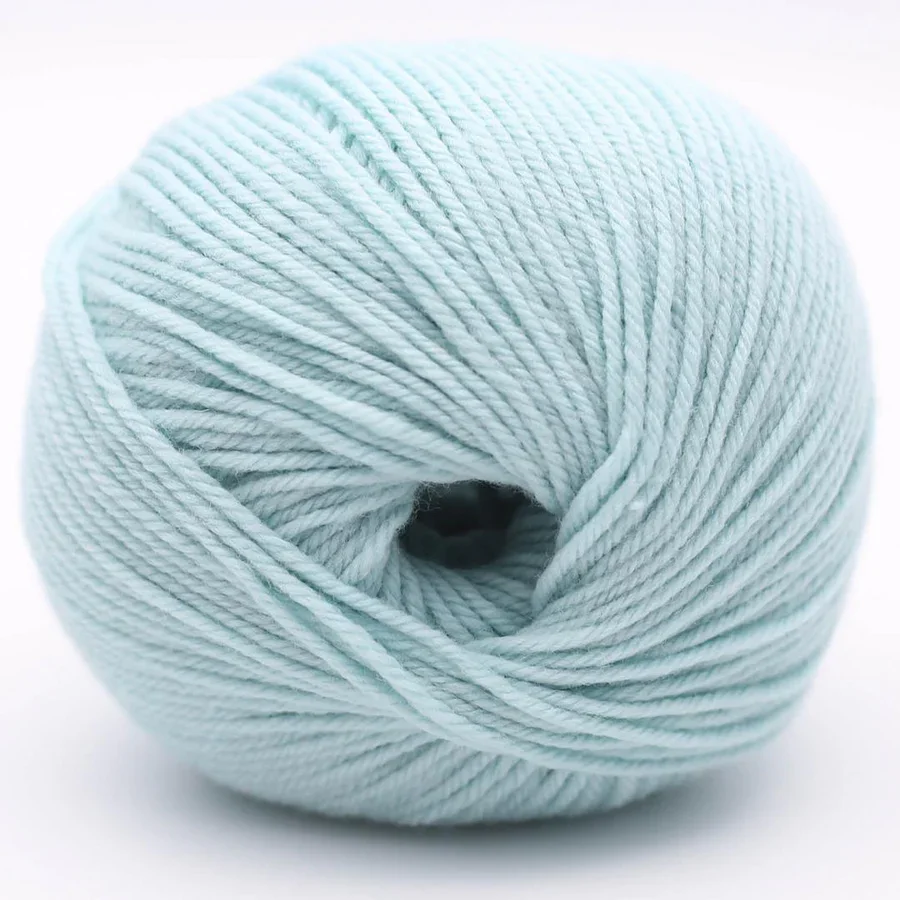
Kremke Soul Merino Wool
▶ Kremke Soul Wool Organic Merino
Fibre: 100% organic merino wool
🌱 Sustainability level: ★★★★☆
Why I recommend it:
Kremke Soul Wool Organic Merino combines softness, durability, and strong ethical standards. It’s fully traceable and mulesing-free, with a modern colour palette that works just as well for children’s items as it does for timeless accessories.
What it’s like to work with:
Soft, elastic merino with a smooth feel
Forgiving tension thanks to natural stretch
Best for:
Kids’ toys, scarves, gloves, hats, and cozy everyday wearables
❌ Not ideal for:
Hot-weather garments, vegan projects, or people with wool sensitivities
👉 Get Kremke Soul Wool Organic Merino here
Personal note: I’ve used this for kids’ toys, scarves, and gloves, and it’s genuinely soft enough for sensitive skin. The stitch definition is beautiful, and finished projects feel noticeably higher quality than conventional merino — this one really does feel special.
▶Sesia Lana Ecologica
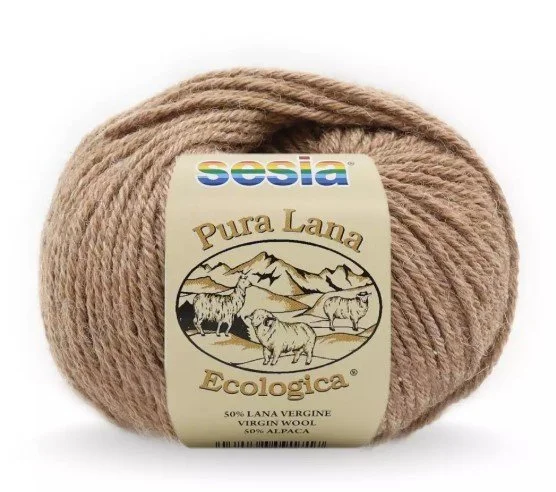
Sesia Pura Lana Ecologica
▶ Lana Ecologica
Fibre: 50% organic virgin wool (RWS-certified), 50% alpaca
🌱 Sustainability level: ★★★★☆
Why I recommend it:
Lana Ecologica blends RWS-certified organic wool with alpaca to create a yarn that’s warm, breathable, and insulating without feeling heavy. It’s a practical choice for winter projects where comfort, softness, and ethical sourcing all matter.
What it’s like to work with:
Soft, lofty feel with gentle elasticity
Alpaca adds warmth and a subtle halo
Works up into cosy, structured fabrics
Best for:
Sweaters, hats, scarves, accessories, and winter layers
❌ Not ideal for:
Warm-weather projects, vegan makes, or lightweight, drapey designs
I'll add more brands here as I test them personally. If you have an organic wool you love, let me know in the comments!
Why Choose Organic Wool?
No synthetic pesticides used on pastures or sheep
Higher animal welfare standards (including no mulesing)
Gentler processing with fewer harsh chemicals
Often higher-quality fibre thanks to careful animal husbandry
Alpaca
✓ Beginner-friendly: Moderate — less elastic than wool but still manageable
✓ Best first purchase: Alpaca Warehouse Baby Alpaca✓ Learning curve: Medium — beautifully soft, but uneven tension will show
🌱 Sustainability level: ★★★★☆
Best for:
Luxurious wearables, scarves, shawls, cold-weather accessories, sensitive skin
❌ Not ideal for:
Structured garments, projects that rely on elasticity, or beginners who struggle with tension control
Working with alpaca:
Alpaca has less elasticity than wool, so it drapes beautifully but doesn’t bounce back as much. That makes it ideal for flowing scarves, shawls, and relaxed garments, but less suitable for fitted pieces that need structure. It’s also very warm — perfect for cold climates, but potentially too much for milder winters.
When buying, look for transparent sourcing and small-farm production. Baby alpaca is the softest option.
Recommended Brands:
▶Alpaca Warehouse: Baby Alpaca
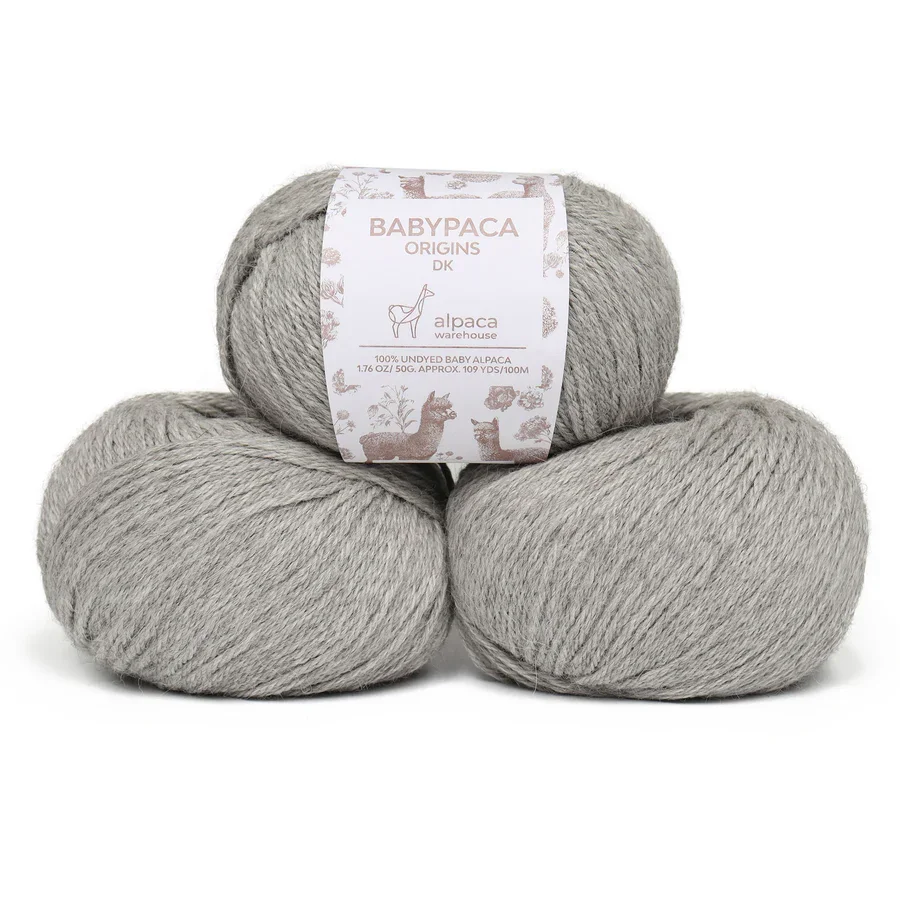
Alpaca Warehouse - Baby Alpaca Undyed Yarn
▶ Alpaca Warehouse – Baby Alpaca
Fibre: 100% baby alpaca
🌱 Sustainability level: ★★★★☆
Why I recommend it:
Alpaca Warehouse Baby Alpaca is luxuriously soft and naturally warm without feeling heavy. Because alpaca contains no lanolin, it’s often well tolerated by sensitive skin, making it a beautiful choice for garments worn close to the body.
What it’s like to work with:
Exceptionally soft with a smooth, lightweight feel
Less elastic than wool, so tension shows more clearly
Creates warm yet breathable fabrics
Weight:
DK
Best for:
Sweaters, scarves, hats, baby items, booties, and cozy wearables
❌ Not ideal for:
Highly structured projects, designs needing elasticity, or beginners struggling with even tension
Silk
✓ Beginner-friendly: No — slippery, inelastic, and unforgiving
✓ Best first purchase: Start with silk blends rather than pure silk
✓ Learning curve: High — every stitch shows, so consistent tension is essential
🌱 Sustainability level: ★★★☆☆
Best for:
Luxury shawls, scarves, heirloom garments, lightweight accessories
❌ Not ideal for:
Beginners, structured projects, or anyone still developing consistent tension
Silk is slippery and unforgiving — it shows every stitch, so consistent tension matters. It’s best approached as a considered, slower project, but the finished result is unmatched for elegance, drape, and strength. Well-made silk pieces can last for generations.
If ethics matter to you, look for peace silk (ahimsa silk), which is harvested after moths emerge naturally. Silk blends are often easier to handle than pure silk.
Recommended Brands:
▶Ganxxet Tie Dye Recycled Sari Silk Ribbon
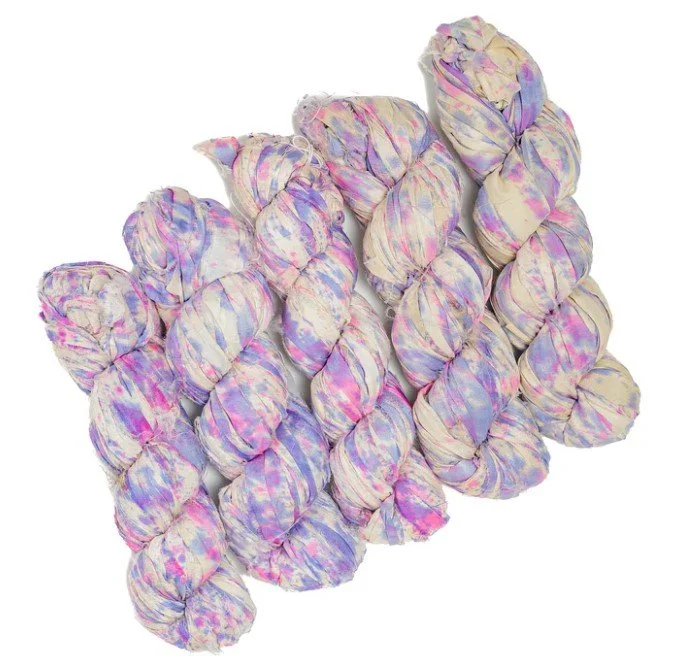
GANXXET Tie Dye Recycled Sari Silk Tie Dye Recycled Sari Silk Ribbon
▶ Tie-Dye Recycled Sari Silk Ribbon
Fibre: 100% recycled sari silk
🌱 Sustainability level: ★★★★☆
Why I recommend it:
This recycled sari silk ribbon is made from upcycled textile waste and hand-dyed in small batches using a tie-dye technique. Each spool is unique, making it ideal for creative projects where texture, colour variation, and individuality are part of the design.
What it’s like to work with:
Soft, flexible ribbon with natural variation
Adds instant texture and visual interest
Best used as a feature material rather than a uniform yarn
❌ Not ideal for:
Projects requiring consistency, precise stitch definition, or repeatable colour matching
Choosing Between Animal Fibres (Quick Guide)
Warmth:
Alpaca → Wool → SilkElasticity:
Wool → Alpaca → SilkDrape:
Silk → Alpaca → WoolHypoallergenic:
Alpaca → Silk → WoolDurability:
Silk → Wool → AlpacaBeginner-friendly:
Wool → Alpaca → SilkEnvironmental impact (best to least):
Peace silk → Alpaca ≈ Organic wool → Conventional silk
What Makes These Better: Quick Certification Guide
You don’t need to memorise certifications to choose better yarns. These are the ones worth paying attention to:
GOTS (Global Organic Textile Standard)
The gold standard for organic yarns — verifies organic fibre content and ethical, low-impact processing across the supply chain.
OEKO-TEX Standard 100
Ensures the finished yarn is tested and safe for human skin — especially important for baby items and wearables.
Global Recycled Standard (GRS)
Confirms recycled content and tracks it through production, with environmental and social criteria included.
REACH (EU Regulation)
An EU regulation that restricts harmful chemicals — a baseline safety indicator rather than a sustainability gold standard.
Better Cotton
Supports improved cotton farming practices and farmer livelihoods, though it does not guarantee organic or chemical-free fibre.
FSC (Forest Stewardship Council)
Ensures wood-based fibres come from responsibly managed forests that protect ecosystems and biodiversity.
Shopping Smart: How to Spot Genuinely Better Yarn
Not every good yarn carries certifications — especially from small or emerging brands. When labels are missing, transparency matters more than buzzwords.
Ask yourself:
What’s the actual fibre content?
Where was it made, and does the brand explain how?
Are dyes or processing methods mentioned at all?
Is the company open about what they’re still improving?
Red flags to watch for:
“Eco-friendly” or “natural” with no specifics
No fibre breakdown or country of origin
Stock images instead of real product photos
Prices that seem too cheap for organic or ethical materials
Honest brands explain their limitations. Vague ones rely on language instead of information.
How to Use This Guide
Starting out?
Choose organic or recycled cotton. Familiar to work with, easy to find, and a meaningful upgrade from conventional yarns.Ready to experiment?
Try hemp or linen. They start firm, soften with use, and are ideal for long-lasting projects.Want something special?
Look at bamboo lyocell, Tencel, or specialty fibres for unique texture, drape, and feel.On a budget?
Recycled cotton offers the best value. Use sustainable yarns for key projects and practice with cheaper options.
Quick Project Match
Wearables & skin contact: Organic cotton, bamboo lyocell, merino
Bags & home décor: Recycled cotton, hemp, jute, raffia
Lightweight summer pieces: Linen, Tencel, bamboo
Statement & art projects: Specialty fibres (e.g. sari silk ribbon)
Frequently Asked Questions
Can I mix sustainable and conventional yarns in one project?
Yes. Start where you are. Use sustainable yarn for the main piece and conventional yarn for swatches or small details if budget is tight.
Which sustainable yarn feels closest to acrylic?
Bamboo lyocell for softness and drape. Organic cotton is closest in handling and predictability.
Do sustainable yarns cost more?
Sometimes. Recycled cotton is often comparable in price. Organic and specialty fibres can cost more upfront but usually last longer.
Which yarn should I try first?
Organic cotton or recycled cotton. They behave like conventional yarns, making the switch easy.
What I'm Currently Testing
I’m always exploring new sustainable yarns. Right now, I’m testing a few options that aren’t quite ready to recommend yet — updates coming once I’ve had time to work with them properly.
Have a sustainable yarn you love?
Drop it in the comments — I might test it next.
Your turn:
Have you tried any yarns from this list? I’d love to hear what worked (or didn’t) for you.
New to sustainable materials? Start with my beginner's guide to eco-friendly crochet materials to build a solid foundation before you dive in.
More inspiring posts

Got a drawer full of unfinished crochet projects? You’re not lazy — you might just be choosing the wrong projects. Discover why we abandon crochet and how to choose projects you’ll actually want to finish.